 EN
EN
 Dansk
Dansk  Deutsch
  Español
  Français
  Hrvatski
  Indonesia
  Italiano
  Magyar
  Nederlands
  Norsk
Norsk  Polski
  Português
  Română
  Suomi
Suomi  Svenska
  Tiếng Việt
  Türkçe
  Čeština
  Ελληνικά
  Русский
  Українська
  български
  ไทย
ไทย  日本語
日本語  简体中文
简体中文  한국어
한국어  עברית
עברית  العربية
4 Best VPNs for China: Safe & Working in 2026

- Quick Overview: Top VPNs for China
- Why Should You Use a VPN for China?
- In-Depth Analysis: Best VPNs for China in 2026
- How We Assessed Top VPNs for China
- How to Set Up a VPN for China (Before You Travel)
- Are VPNs Legal in China?
- Internet Censorship Laws for China
- Which Websites Are Blocked in China?
- What to Do if Your VPN Stops Working in China
- FAQs
- Bottom Line
If you’re flying to mainland China soon, you may or may not know how tricky it is to find a VPN that works there. I’ve seen too many travellers land in Beijing or Shanghai only to realise they can’t download a VPN and suddenly can’t use WhatsApp, Gmail, Instagram, or any Google service.
The country’s Great Firewall blocks thousands of popular sites and apps we use daily, and many VPNs that look good on paper fail the moment you try them on hotel WiFi. That’s why choosing a VPN that still works in China takes more than checking its speed or price. We reviewed dozens of services and focused on those known for strong obfuscation that masks your VPN traffic on stable nearby servers in Hong Kong, Japan, and Singapore.
I always give friends and colleagues the same advice: set up your VPN before you ever set foot in China. So, in this guide, I’ll show you the best VPNs you can still use in China, I’ll walk you through installing them, test them on both mobile data and WiFi, and share the troubleshooting fixes that can save you when connections get flaky.
Quick Overview: Top VPNs for China
The table below highlights the key features of all the recommended VPNs for use in China and beyond. It shows whether each VPN has servers optimized for China and if they have an audited no-logs policy to help keep your data private.
I’ve also included useful extras, such as the number of servers each one has, whether you can get a China IP address, the supported Chinese payment methods, and whether they accept cryptocurrencies (handy if you prefer not to share too much personal information).
Note. Baseline refers to our tester's speed without the VPN connected.
Why Should You Use a VPN for China?
In mainland China, services like Google Search, Gmail, WhatsApp, Instagram, Facebook, YouTube, X, and many global news outlets are blocked. A reliable VPN restores your access to these platforms so you can reply to work emails, message friends, or even load directions.
There’s another angle most travellers don’t think about until it happens: a VPN also becomes critical during sensitive periods or political events. That’s when the Great Firewall becomes more aggressive, and even previously working VPNs can drop repeatedly. So, it’s worth having a VPN with real obfuscation and security features, which makes the difference between staying connected and being completely stuck.
Another reason people use a VPN in China is to securely access services from home. Many banking apps, cloud drives, and university portals block foreign logins as a fraud precaution. A VPN helps you connect from a familiar region so you can submit work, access school assignments, or manage finances without triggering security alerts.
In-Depth Analysis: Best VPNs for China in 2026
1. Astrill VPN — Optimized Servers for Reliable Connections to Websites and Apps From China

 Try Risk-Free for 30 Days
Tested April 2026
| Best Feature | Servers are hosted in high-priority locations to reduce latency and network congestion |
|---|---|
| Speed | In testing on a nearby server, speeds stayed consistent enough for 4K streaming, large uploads, and gaming without lag, even with StealthVPN enabled |
| Best Protocol for China | StealthVPN hides VPN traffic by disguising it as regular HTTPS data, which helps avoid detection by China’s deep packet inspection |
| Works With | Max, HBO Go Asia, Telegram, BBC iPlayer, Google, X (Twitter), YouTube TV, WhatsApp, and more |
Astrill is one of the few VPNs built with China in mind, and that alone sets it apart from most providers. Its China-ready servers are optimized for offering fast speeds even under heavy restrictions. In our tests, we found them by simply typing “China Supercharged” into the search bar. You also get access to plenty of servers located near China, like Hong Kong, Japan, and Taiwan, for fast connections in the country.
The main appeal is stability. Even on hotel WiFi or campus networks where many VPNs fail outright, Astrill tends to connect quickly and stay connected. Its StealthVPN and OpenWeb protocols are designed specifically to survive the Great Firewall, and it even lets you tweak MTU values to make your data harder to detect. This is why travellers, expats, and long-term residents often list it as their most reliable option.
It’s not the fastest VPN we tested, but Astrill VPN delivered good speeds for most online activities. As obfuscation adds some extra processing steps, you can see some slowdown when StealthVPN is active. But the OpenWeb protocol makes a noticeable difference. In our tests, speeds dropped by only around 27% on the Thailand server, which kept the connection smooth enough for 4K streaming, large file uploads, and even online gaming without lag.
 Astrill’s simple app includes a neat upload/download graphic so you can gauge your data usage in China
The downside is that Astrill does not offer a money-back guarantee, which makes it less flexible than other VPNs on this list. However, you can get a free 1-day pass for referring a friend. And Astrill VPN also provides 1 free hour of access per day to every user forever, as long as you do a “daily check-in.”
Useful Features
- Choice of 5 proxies. On the occasions that Astrill VPN has troubles working in China, you’ll have other options since it offers a selection of proxies, including HTTPS, SOCKS4a, and SOCKS5. Keep in mind that these won’t encrypt your traffic, though — I only recommend using them as a backup if you have no other option.
- Protect browsers only or all apps. Using the OpenWeb protocol, you can configure Astrill VPN to protect all apps or just web browsers. That’s useful if you want your non-browser apps to run faster in China by using a normal connection for local apps like Didi or WeChat.
- Customizable connections. Using OpenVPN, you can choose between 256-, 192-, and 128-bit encryption, and you can even turn off encryption completely. Turning your encryption level down could help boost your speeds without sacrificing security. I don’t recommend turning it off in China, though.
- Dedicated IPs. For a little extra, you can get a dedicated IP address that’s yours alone. I use them to skip the endless CAPTCHAs that come with shared IPs, particularly while traveling.
- Works in China
- Privacy-friendly
- High price
- Slow speeds
2. PrivateVPN — Customizable Security to Optimize Your Connection in China

| Best Feature | Adjust encryption levels to balance security and speed in China |
|---|---|
| Speed | Dropping encryption to a lighter setting and using Stealth Mode produced a noticeable speed boost, keeping hotel Wi-Fi sessions smooth for streaming and messaging |
| Best Protocol for China | Stealth VPN mode disguises VPN traffic as regular HTTPS over port 443 |
| Works With | Netflix, Max, Prime Video, Asana, HBO Go Asia, BBC iPlayer, Telegram, and more |
PrivateVPN is a great option if you want more control over how your connection behaves in China. You can lower encryption for faster speeds, switch to port 443 to blend in with regular HTTPS traffic. When the Firewall becomes more aggressive, you can enable Stealth VPN mode, which disguises your VPN traffic as regular HTTPS to bypass DPI. Plus, we even tested setting PrivateVPN's encryption to 128-bit, which led to a decent speed boost.
These little adjustments are what make PrivateVPN perform surprisingly well on hotel WiFi and restrictive networks where many other VPNs break. However, you’ll need to enable Stealth VPN manually in the settings. For tougher restrictions, PrivateVPN suggests using the OpenConnect app, and it provides an easy setup guide for this workaround.
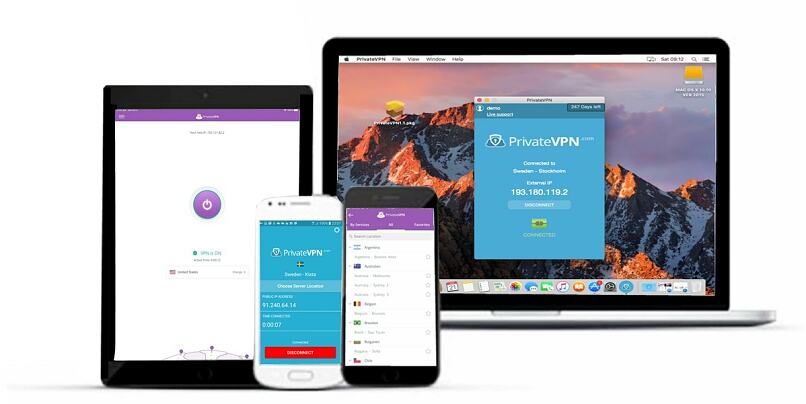
 You can access these settings from the Advanced View
The service does have a smaller server network than the other VPNs on this list, which means fewer regional options when you need alternatives during peak hours. But it offsets this with self-owned servers and direct bandwidth sourcing, which reduces congestion and helps keep speeds more consistent than you might expect from a compact network.
If you want to try it out first, PrivateVPN comes with a 30-day money-back guarantee, so you can test all the China-focused settings before travelling and see whether the performance fits your needs.
Useful Features
- Customer support via email. PrivateVPN’s website is blocked in China, so you won’t be able to access live chat. However, you can use its dedicated email to get assistance. I got a reply within 20 minutes when I tested it. Its live chat also uses a translation feature, so Chinese users can get help in their native language.
- Easy to use. The Advanced View has some solid security settings, but you don’t even have to leave Simple View to secure your connections in China. Just choose a server and hit the big power button. This makes it a great choice if you’re not super experienced with VPNs.
- Remote technical assistance. If you’re worried about getting stuck with connection errors or misconfigured protocols in China, PrivateVPN can log in remotely and set everything up for you. The support team will personally configure obfuscation and troubleshoot access issues.
- Excellent for torrenting
- Very affordable
- Solid security
- Small server network
- Speeds aren’t great
3. TunnelBear — User-Friendly Interface to Easily Protect Your Online Data in China

| Best Feature | Similar-looking interfaces simplify secure browsing on all devices from China |
|---|---|
| Speed | With GhostBear enabled, speeds dropped by around 28%, but connections stayed stable enough for messaging, video calls, and continuous streaming without major buffering |
| Best Protocol for China | WireGuard with GhostBear enabled combines speed and obfuscation by masking VPN traffic as normal HTTPS data, helping it avoid detection by China’s filters |
| Works With | Netflix, Max, YouTube TV, Spotify, HBO Go Asia, and more |
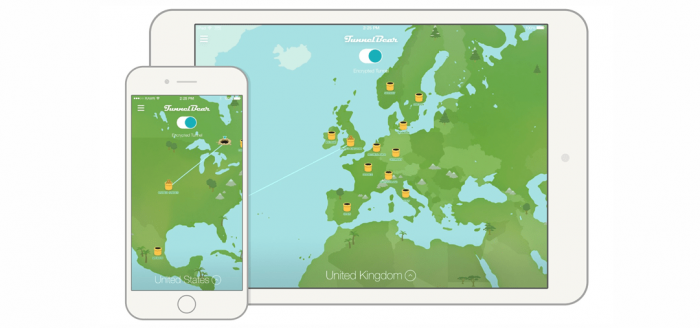
TunnelBear’s simple interface makes it one of the easiest VPNs to use in China. Its map-based server selection is intuitive — just pick a server, and a cartoon bear digs its way from your location to the destination. Since China is a big country, the visual map makes quickly identifying and connecting to the nearest server easy.
 You can minimize TunnelBear to a simple toggle switch and server selection screen
Its setup even adds a bit of fun with bear-themed instructions and puns. It took me less than 2 minutes to install the VPN on all the devices I tested, including Mac, Android, and Windows. TunnelBear also has fast short-distance speeds, according to our tests. The Fastest Tunnel feature automatically connected us to the best server — we experienced steady speeds with only 28% speed loss.
The GhostBear (obfuscation) feature makes it one of the more reliable VPNs, as it can go undetected on restrictive networks. To activate it, go to Settings > Connection > GhostBear. I was disappointed that it wasn’t available on iOS, though. Automatic reconnection works seamlessly when switching between WiFi sources, so you’ll stay protected as you move around China, using hotel or café WiFi.
A downside is the lack of a standard money-back guarantee; refunds are only available on a case-by-case basis, as stated on its website.
Useful Features
- Trusted Networks. You can add known networks to a safelist for automatic protection only on unfamiliar networks — a handy feature for those using China’s public WiFi, where security is generally low.
- Leak protection and VigilantBear (kill switch). Both features worked reliably in my tests, blocking any slip-ups that could expose my IP or private data. So, your real location won’t be exposed to snoops.
- Encrypted Client Hello (ECH). This technology helps TunnelBear stay accessible in countries like China by encrypting DNS requests, making it harder for censors to block the site. It builds on the older ESNI feature and is currently available on Android.
- Easy-to-use, fun apps
- GhostBear setting obfuscates traffic
- Unlimited simultaneous devices
- No money-back guarantee
- Slow speeds on distant servers
- Based in Canada
4. Private Internet Access (PIA) — Local and Global Servers Give You Plenty of Options to Stay Connected in China

| Best Feature | One of the very few VPNs that offer a server location (even a virtual one) for China |
|---|---|
| Speed | When connected to servers in Japan and South Korea, PIA delivered strong performance with only moderate slowdowns |
| Best Protocol for China | WireGuard with Multi-Hop enabled provides strong encryption while routing your connection through multiple servers to bypass detection and improve reliability |
| Works With | Netflix, Max, Messenger, YouTube TV, HBO Go Asia, The Financial Times, Pinterest, and more |
PIA has the largest server network of all the China VPNs we listed — and it even includes a virtual server location for China. Since the server isn’t physically located in the country, PIA can give you a Chinese IP without being subject to local data laws. This means you can securely access Chinese services like Youku, Bilibili, or Alipay without exposing your data to government requests.
 You can also enable MACE with one click to get rid of pop-up ads on Chinese sites
With PIA, you can connect unlimited devices in China. Perfect if you’ve got a bunch of gadgets or you’re traveling with family and everyone wants safe and unfettered access to the internet. In our PIA tests, we experienced stable connections without any drops, even with 6 laptops and 10 mobile phones active.
The VPN doesn’t consistently work in China, but its website and 24/7 customer support can help with several workarounds to help improve stability. Start by switching between the WireGuard and OpenVPN protocols. If that doesn’t help, try one of PIA’s Multi-Hop setups — either with the SOCKS5 proxy or Shadowsocks. Just note that this might affect speeds. As a last resort, you can try manual configuration files with detailed instructions on the PIA website.
It offers a 30-day money-back guarantee, so you can try it without financial risk — and getting a refund is straightforward.
Useful Features
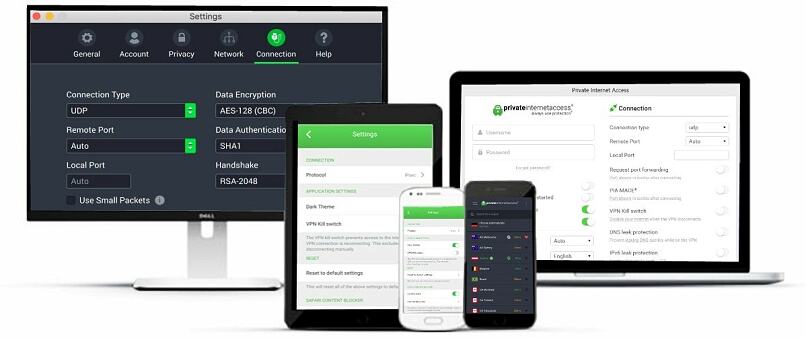
- Adjustable encryption. PIA lets you choose between two encryption levels with the OpenVPN protocol. AES 256-bit (the strongest available) is my go-to for online banking, but I switch to AES 128-bit for streaming as it offers better speeds. However, if speed is the main goal, I’d recommend the lightweight WireGuard protocol — it gave us the best results overall.
- Connection automation. This tells the app to automatically connect when certain conditions are met, like if you join a public WiFi network. This is really important no matter where you are in the world, but even more so in China.
- Many servers to choose from
- Customizable security settings
- Solid choice for torrenting
- Hit-or-miss customer support
- Tricky to navigate
How We Assessed Top VPNs for China
When looking for VPNs for use in mainland China, we focus on what actually keeps you connected once the Great Firewall kicks in. Speed and consistency come first, followed by how well the VPN performs on hotel WiFi and public networks, where many services fail. We also test nearby servers in Japan, Singapore, and South Korea, as these server locations usually work best inside China.
Here are the key features to look for when choosing a VPN that can work inside China:
- Stealth or obfuscated servers. These disguise VPN traffic as regular HTTPS data so it can slip past China’s filters.
- Nearby servers in Asia. Servers in Hong Kong, Japan, Singapore, and Taiwan usually offer the best speed and stability for users inside mainland China.
- Strong encryption and a no-logs policy. Keeps your online activity private even on public Wi-Fi or hotel networks.
- Multi-device compatibility. A dependable VPN should work on Android, iOS, Windows, and macOS with minimal setup.
- Responsive customer support. As most major VPN sites are blocked in China, quick email-based or mirror-site support can be extremely helpful when connections fail.
For more information on our thorough testing process, please visit our VPN testing methodology page. Our global team constantly updates VPN performance data to bring you the most reliable recommendations. If you’re interested in conducting your own evaluations, you can consider these factors.
How to Set Up a VPN for China (Before You Travel)
China’s Great Firewall blocks most VPN websites as part of the government’s tight control of the flow of information in and out of the country. Despite this, VPN use is widespread, doubling in recent years amid growing censorship. To protect your online activity from the start, your best bet is to prepare your VPN before heading to the country:
- Download, install, and log into VPN apps on all devices you plan to use in China before you depart.
- Save important information offline, like your user credentials, app activation codes, mirror site URLs, and customer support contacts.
- You may want to install a backup VPN as well, as no single provider is 100% reliable in China — bring along 2–3. Luckily, most top VPNs offer a money-back guarantee, so it’s financially risk-free.
- Enable auto-connect and kill switch options to prevent leaks on public or hotel WiFi.
If you’re already in China, you’re not totally out of luck. We do not recommend using government-approved VPNs (and most aren’t publicly available, anyway). However, some VPN vendors provide alternative methods to download their apps in restrictive regions. Here’s how:
- Use mobile hotspot or cellular data. Restrictions tend to be less consistent than WiFi from major ISPs like Unicorn or China Telecom.
- If possible, connect to a VPN beforehand. This only applies if you already have a VPN, but want a backup solution.
- Get the mirror site by asking support (Astrill) via email for the latest China-accessible download link.
- Go to the mirror site to pay, sign up, and download the VPN as you normally would.
- Alternatively, support may email you the OpenVPN/WireGuard config files to manually configure a VPN connection.
Are VPNs Legal in China?
The legal status of VPNs in China exists in a complex gray area that varies by region and circumstance. Only government-approved VPNs are officially permitted, but the reality of enforcement is more nuanced. Based on extensive research, there have been no documented cases of tourists facing legal penalties for personal VPN use in China.
Even Chinese citizens rarely encounter direct legal consequences for using VPNs for personal purposes. Instead of pursuing individual users, authorities typically focus on making VPN access more difficult through technical blocking measures.
However, there have been several notable enforcement cases, primarily targeting commercial VPN operations. According to CNN, in October 2017, a Shanghai court sentenced a developer surnamed Dai to a three-year suspended prison term and fined him 10,000 yuan for developing and selling VPN software1.
What you do with the VPN also matters. A Uyghur student, a persecuted minority in China, was sentenced to 13 years in prison for using a VPN to obtain “illegal information” (Radio Free Asia, 2023)2. Another Chinese national had his earnings confiscated and was issued with a fine for using a VPN to work for a company abroad for years3 (The Guardian, 2023).
Some provinces take a more aggressive stance through technical restrictions rather than legal punishment. There have been reports of local authorities temporarily suspending cellular service until VPN apps are removed from users' devices.
In these cases, individuals typically must visit a police station, delete the VPN apps, and have their devices checked before service is restored. Additionally, promoting or recommending unauthorized VPNs on Chinese social media platforms can attract unwanted attention from authorities. For more information, you can visit our detailed guide on the legal landscape of VPN usage in China.
Internet Censorship Laws for China
China has one of the strictest internet control systems in the world, and internet freedom research from groups like Freedom House, GreatFire, and Citizen Lab consistently confirms this. The country blocks thousands of websites and apps through a nationwide filtering system often referred to as the Great Firewall.
There are 3 major laws that shape how China manages online content:
- The Cybersecurity Law outlines strict rules for how companies handle user data and requires platforms to store certain information within China.
- The Data Security Law regulates how data is transferred across borders.
- The Personal Information Protection Law gives authorities significant oversight over how apps operate.
Together, these laws give the government wide authority to restrict content, control information flows, and remove anything considered politically sensitive or harmful to social stability.
Technically, the system relies on several layers of filtering, including DNS tampering, IP blocking, keyword filtering, and deep packet inspection. These controls apply across hotel WiFi, public hotspots, and mobile carriers. During politically sensitive periods, researchers have observed even tighter filtering, which can disrupt VPN connections or slow them down. Although these measures are not aimed at tourists, they affect anyone using the internet in China.
Which Websites Are Blocked in China?
Some of the most popular blocked websites and apps include:
- Search and email. Google, Gmail, Yahoo, Bing
- Social media. Facebook, Instagram, X (Twitter), Threads, Snapchat
- Messaging apps. WhatsApp, Telegram, Messenger, Discord
- Streaming and entertainment. YouTube, Netflix, Spotify, Twitch
- News and media. BBC, The New York Times, Reuters, Bloomberg
In place of these, Chinese users rely on local services such as WeChat for messaging, Weibo for social media, and Baidu for search. While these apps are widely used, they operate under government monitoring and strict data regulations.
What to Do if Your VPN Stops Working in China
Even the best VPNs can occasionally stop connecting in China due to new censorship updates or temporary network restrictions. These issues are common, but most can be fixed quickly with a few simple adjustments.
If your VPN will not connect:
- Try switching to a different server or protocol. Start with nearby servers such as Hong Kong or Japan, then test OpenVPN (TCP 443) or WireGuard.
- Enable any stealth or obfuscation mode, such as StealthVPN, to disguise your connection.
If your internet is slow:
- Connect to servers closer to mainland China, which usually offer lower latency.
- Choose lighter protocols like WireGuard or OpenWeb for faster speeds.
If your VPN app will not load:
- Use a mobile hotspot instead of hotel or café Wi-Fi, which often has additional restrictions.
- Reinstall the VPN using backup configuration files if you saved them before your trip.
If streaming is not working:
- Refresh your IP by reconnecting to a different server.
- Switch to a nearby region such as Singapore or Taiwan, where streaming services are less likely to block IP ranges.
If none of these steps work, contact your VPN’s support team by email to request updated configuration files or China-accessible mirror links. Most providers respond quickly and can help you get back online.
FAQs
Bottom Line
Finding a trustworthy VPN that works reliably in China can be difficult because the country has increased its crackdown on VPNs. The Great Firewall only permits government-approved VPNs, which the state heavily monitors. Plus, because China updates its GFW technology all the time, even the most reliable VPNs don’t work 100% of the time.
That said, a few services have been proven to work there more reliably than others, and all the VPNs on this list are designed to work on restrictive networks. Additionally, they can access content in HD and 4K from anywhere while maintaining a safe and private connection. Of the group, Astrill VPN stands out for its strong anti-detection technology and reliability.
References
- https://edition.cnn.com/2018/10/10/asia/china-vpn-censorship-intl/index.html/
- https://www.rfa.org/english/news/uyghur/student-sentenced-06082023154805.html/
- https://www.theguardian.com/world/2023/oct/09/chinese-programmer-ordered-to-pay-1m-yuan-for-using-virtual-private-network/


Your online activity may be visible to the sites you visit
Your IP Address:
216.73.216.30
Your Location:
US, Ohio, Columbus
Your Internet Provider:
Some sites might use these details for advertising, analytics, or tracking your online preferences.
To protect your data from the websites you visit, one of the most effective steps is to hide your IP address, which can reveal your location, identity, and browsing habits. Using a virtual private network (VPN) masks your real IP by routing your internet traffic through a secure server, making it appear as though you're browsing from a different location. A VPN also encrypts your connection, keeping your data safe from surveillance and unauthorized access.
About the Author
Husain Parvez is a former writer at vpnMentor, focusing on VPN reviews, detailed how-to guides, and hands-on tutorials. Husain was also a part of the vpnMentor Cybersecurity News bulletin and loved covering the latest events in cyberspace and data privacy.

Other VPNs that have recently proven unreliable to work in China are Ivacy VPN, PrivadoVPN, Total VPN, TorGuard, Hotspot Shield, and AtlasVPN.Can you explain the reason and relative test result?
I may verify PIA does also not work.Do you think the most possible reason why vpn is banned by china is they come from America and their allies? Since EXPRESS is known by their adware and malware.In contrast, if vpn providers provide the data of Chinese's user, will the green traffic light have been lasting for ever?

I use v1vpn and it does work really well, i recommed it

Just to be clear, unlike Hong Kong and Macau, Taiwan is NOT part of China and doesn't block any VPN services and internet traffic.


Please, comment on how to improve this article. Your feedback matters!