 EN
EN
 Dansk
Dansk  Deutsch
  Español
  Français
  Hrvatski
  Indonesia
  Italiano
  Magyar
  Nederlands
  Norsk
Norsk  Polski
  Português
  Română
  Suomi
Suomi  Svenska
  Tiếng Việt
  Türkçe
  Čeština
  Ελληνικά
  Русский
  Українська
  български
  ไทย
ไทย  日本語
日本語  简体中文
简体中文  한국어
한국어  עברית
עברית  العربية
4 Best VPNs for China: Safe & Working in 2026

- China VPN Features at a Glance
- Why People Use a VPN in China
- Best VPNs for China: In-Depth Review
- How to Choose a VPN for China
- How to Set Up a VPN for China Before You Travel
- Are VPNs Legal in China?
- How Internet Censorship Works in China
- Which Websites Are Blocked in China?
- What to Do if Your VPN Stops Working in China
- FAQs
- Bottom Line
The best VPNs for China in 2026 are services with strong obfuscation, stable nearby servers, and a proven ability to stay connected on restrictive networks. These are the options that performed most consistently in our tests.
- Astrill VPN — Best for travelers and expats who need reliable access in China, with strong anti-detection technology.
- PrivateVPN — Best for budget users looking for flexible security settings and solid stealth features.
- TunnelBear — Best for beginners who prefer easy-to-use apps and quick setup.
- Private Internet Access (PIA) — Best for techie users seeking a large server network and more control over their connection.
Most VPNs don’t work reliably in China. Some are blocked completely, while others connect briefly but fail on hotel WiFi, public networks, or during stricter censorship periods.
China’s Great Firewall blocks thousands of websites and apps, including Google, WhatsApp, Instagram, and YouTube.1 Because of this, it’s important to install and set up your VPN before you arrive, as many VPN websites are also inaccessible inside the country.
My team and I reviewed dozens of VPNs and focused on those that avoid detection with scrambled traffic and deliver stable performance on both WiFi and mobile data. These are very important requirements for a VPN to be able to work in China.
The VPNs we recommend are a good fit for users who rely on blocked apps and services while in China. They’re not ideal if you expect guaranteed uptime, since connections can still be unreliable even with top providers.
China VPN Features at a Glance
Not every VPN works the same way in China, so it’s worth comparing how each one handles restrictions and connectivity.
- Astrill VPN — Advanced obfuscation and specialized protocols for China.
- PrivateVPN — Stealth mode and adjustable encryption for restrictive networks.
- TunnelBear — Built-in obfuscation with a simple interface, but lacks more advanced features.
- PIA — Chinese IP with extensive global coverage, but manual setup required for best results.
The table below compares key details such as server count, speeds, and access-related features.
Note: Baseline refers to our tester’s speed without the VPN connected.
Why People Use a VPN in China
A VPN is useful in China because it helps restore access to everyday online services like Gmail, Messenger, and other platforms that may otherwise be restricted. This allows users to check email, message friends, follow directions, and stay connected to familiar services while in the country.
It can also be especially important during politically sensitive periods. During these times, even VPNs that normally work can start dropping connections, which is why strong obfuscation and dependable performance matter.
Another common reason to use a VPN in China is to reach services from home without triggering security alerts. Banking apps, cloud storage platforms, and university portals sometimes block foreign logins as a fraud precaution. A VPN can help users connect through a more familiar location, making it easier to manage finances, access schoolwork, or log in to work accounts.
Best VPNs for China: In-Depth Review
1. Astrill VPN — Optimized Servers Designed for China’s Networks

 Try Risk-Free for 30 Days
Tested October 2026
| Best Feature | Servers are hosted in high-priority locations to reduce latency and network congestion |
|---|---|
| Speed | In testing on a nearby server, speeds stayed consistent enough for 4K streaming, large uploads, and gaming without lag, even with StealthVPN enabled |
| Best Protocol for China | StealthVPN hides VPN traffic by disguising it as regular HTTPS data, which helps avoid detection by China’s deep packet inspection |
| Works With | Max, HBO Go Asia, Telegram, BBC iPlayer, Google, X (Twitter), YouTube TV, WhatsApp, and more |
Astrill is one of the few VPNs tailored for use in China, which sets it apart from most providers. Its China-ready servers are built to maintain usable speeds under heavy restrictions. We found them by typing “China Supercharged” into the search bar. Astrill also offers nearby locations like Hong Kong, Japan, and Taiwan, which help maintain faster connections in the region.
Its biggest advantage is reliability. On hotel WiFi and campus networks where many VPNs fail, Astrill usually connected quickly and stayed active. Its StealthVPN and OpenWeb protocols were developed for restrictive networks, and it also lets users adjust MTU values to make traffic harder to detect.
Astrill wasn’t the fastest VPN we reviewed, but it still delivered good performance for most online activities. Obfuscation adds extra processing, so some slowdown is expected when StealthVPN is enabled. OpenWeb improved performance. Speeds dropped by only about 27% on the Thailand server, which was still enough for 4K streaming, large file uploads, and online gaming without lag.
 Astrill’s simple app includes a neat upload/download graphic so you can gauge your data usage in China
The biggest drawback is its high price. Plus, Astrill doesn’t offer a money-back guarantee, which makes it less flexible than other VPNs on this list. It does, however, offer a free 1-day pass for referring a friend, plus 1 free hour of access per day through its daily check-in feature.
Best for:
- People who need a VPN that works reliably in China
- Use on public WiFi in airports, cafés, and other restricted networks
- Streaming, file sharing, and general online activity with added security
Not ideal for:
- Budget users looking for a low-cost VPN
- Anyone who prefers risk-free payment options
- Users who prioritize top speeds above all else
Notable features
- Proxy alternatives: Astrill includes several proxy options, including HTTPS, SOCKS4a, and SOCKS5, which can help as a backup if the VPN isn’t working. These don’t encrypt traffic, so they are better as a last resort.
- Browser-only protection: With OpenWeb, users can protect just their browser or all apps. This can help local apps like Didi or WeChat run normally while keeping browser traffic protected.
- Adjustable encryption: Using OpenVPN, Astrill supports 256-bit, 192-bit, and 128-bit encryption, and even allows encryption to be turned off entirely. Lower encryption levels can improve speed, though turning it off is not a good idea in China.
- Dedicated IP: For an extra cost, Astrill offers a dedicated IP, which can help reduce CAPTCHAs when traveling.
2. PrivateVPN — Fine-Tuned Settings to Use the Internet Safely in China

| Best Feature | Adjust encryption levels to balance security and speed in China |
|---|---|
| Speed | Dropping encryption to a lighter setting and using Stealth Mode produced a noticeable speed boost, keeping hotel Wi-Fi sessions smooth for streaming and messaging |
| Best Protocol for China | Stealth VPN mode disguises VPN traffic as regular HTTPS over port 443 |
| Works With | Netflix, Max, Prime Video, Asana, HBO Go Asia, BBC iPlayer, Telegram, and more |
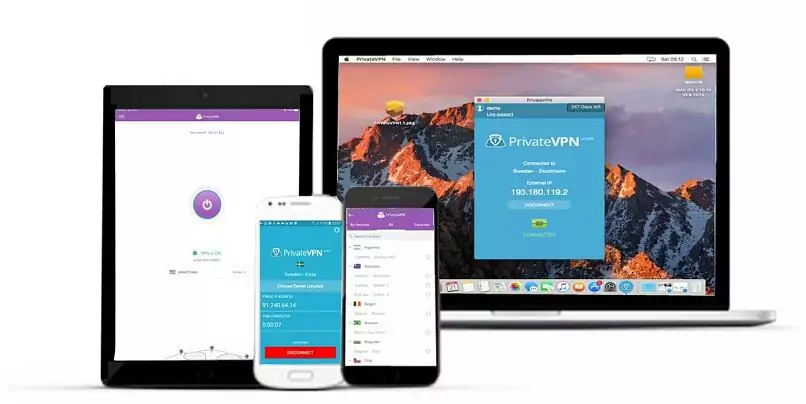
PrivateVPN is a strong option if you want to adjust how your VPN behaves in China. It allows you to lower encryption for faster speeds, switch to port 443 to blend in with regular HTTPS traffic, and enable Stealth VPN mode when restrictions become harder to work around. We found that switching to 128-bit encryption led to a noticeable speed increase.
 You can access these settings from the Advanced View
These configurations help PrivateVPN perform well on WiFi networks where many VPNs struggle. However, Stealth VPN needs to be enabled manually in the settings. For stricter conditions, PrivateVPN also recommends using the OpenConnect app, and it provides a setup guide for it.
The server network is smaller than other VPNs on this list, so there are fewer alternatives during peak hours. However, PrivateVPN uses self-owned servers and direct bandwidth sourcing, which helps reduce congestion and maintain stable speeds despite more limited coverage.
It also includes a 30-day money-back guarantee, giving you time to try its China-specific features before traveling.
Best for:
- Customizing security features to improve performance in China
- Handling networks that require manual tweaks to stay connected
- Testing different speed and configuration options before travel
Not ideal for:
- Users who want a large server network
- People who prefer a plug-and-play VPN with no hassle
- Anyone who expects consistently high speeds without manual tuning
Notable features
- Email support: PrivateVPN’s website is blocked in China, so live chat may not be available. It offers email support, and we received a reply within 20 minutes.
- Simple and advanced views: The app includes an Advanced View with additional controls, but it can also be used from Simple View with minimal setup.
- Remote technical help: PrivateVPN can provide remote assistance to troubleshoot connection issues.
3. TunnelBear — User-Friendly Apps With Built-In Obfuscation for China


| Best Feature | Similar-looking interfaces simplify secure browsing on all devices from China |
|---|---|
| Speed | With GhostBear enabled, speeds dropped by around 28%, but connections stayed stable enough for messaging, video calls, and continuous streaming without major buffering |
| Best Protocol for China | WireGuard with GhostBear enabled combines speed and obfuscation by masking VPN traffic as normal HTTPS data, helping it avoid detection by China’s filters |
| Works With | Netflix, Max, YouTube TV, Spotify, HBO Go Asia, and more |
TunnelBear’s simple interface makes it one of the easiest VPNs to use in China. Its map-based server selection is intuitive. Choose a server, and a cartoon bear tunnels from your location to the destination. Since China is a big country, the map helps you quickly spot and connect to a nearby server.
 The bear crawls all the way back home again when you disconnect
The apps are more approachable than most VPNs. Installation took less than 2 minutes on Mac, Android, and Windows devices. During testing, TunnelBear also delivered fast short-distance speeds. Its Fastest Tunnel feature automatically connected us to the best server, and speeds dropped by only 28% while remaining stable.
Its GhostBear feature is one of the main reasons it works relatively well on restrictive networks. It disguises VPN traffic to make detection harder, which can improve reliability in China. To turn it on, go to Settings > Connection > GhostBear. One drawback is that it isn’t available on iOS.
The main downside is flexibility. TunnelBear doesn’t have a standard money-back guarantee, and refunds are only considered on a case-by-case basis, according to its website.
Best for:
- Beginners who want a VPN that is easy to install and use
- Fast setup on desktop and mobile devices
- Public WiFi use on restrictive networks
Not ideal for:
- People who want more advanced controls
- iPhone users who need obfuscation
- Anyone looking for a standard refund policy
Notable features
- Trusted Networks: Lets you safelist known networks, so protection only activates on unfamiliar WiFi. This is useful on public networks in China, where security can be inconsistent.
- Leak protection and VigilantBear: TunnelBear’s leak protection and kill switch worked reliably, helping prevent IP exposure if the VPN drops.
- Encrypted Client Hello (ECH): Helps TunnelBear stay accessible in restrictive countries by encrypting DNS-related requests, making it harder to detect and restrict traffic. It is currently available on Android.
4. Private Internet Access (PIA) — Wide Server Choice With a Chinese IP Option

| Best Feature | One of the very few VPNs that offer a server location (even a virtual one) for China |
|---|---|
| Speed | When connected to servers in Japan and South Korea, PIA delivered strong performance with only moderate slowdowns |
| Best Protocol for China | WireGuard with Multi-Hop enabled provides strong encryption while routing your connection through multiple servers to bypass detection and improve reliability |
| Works With | Netflix, Max, Messenger, YouTube TV, HBO Go Asia, The Financial Times, Pinterest, and more |
PIA has the largest server network on this list and includes a virtual server location for China. Because this server isn’t physically based in the country, it can provide a Chinese IP without being subject to local data laws. This allows access to services like Youku, Bilibili, and Alipay without relying on infrastructure inside China.
 You can also enable MACE with one click to get rid of pop-up ads on Chinese sites
Also, PIA supports unlimited simultaneous connections, which is useful if you are traveling with multiple devices or sharing access with others. We didn’t experience any connection drops, even with 6 laptops and 10 mobile phones active at the same time.
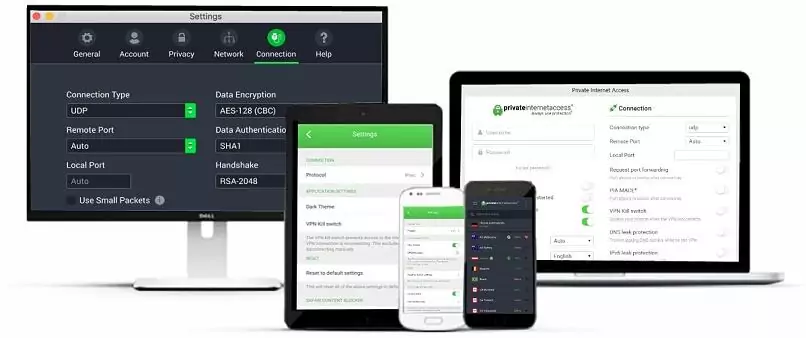
The VPN doesn’t always work consistently, but it offers several ways to improve performance. You can switch between WireGuard and OpenVPN, or try a Multi-Hop setup using SOCKS5 or Shadowsocks. These options can help on restrictive networks, though they may reduce speeds. PIA also provides manual configuration files as a fallback.
PIA offers a 30-day money-back guarantee, so you can test it before committing.
Best for:
- Accessing a Chinese IP without using a physical server in China
- Connecting many devices at the same time
- Trying different connection methods to improve performance
Not ideal for:
- People who want a VPN that works reliably in China without adjustments
- Users who prefer a simpler interface
- Anyone looking for the most stable option on restricted networks
Notable features
- Adjustable encryption: Like PrivateVPN, PIA lets you choose between AES 256-bit and AES 128-bit encryption with OpenVPN. AES 256-bit offers stronger protection, while AES 128-bit can improve speeds. WireGuard delivered the best results in our experience.
- Connection automation: PIA can connect automatically under certain conditions, such as joining a public WiFi network. This is especially useful in China, where network conditions can change frequently.
How to Choose a VPN for China
Choosing a VPN for China comes down to one question: will it stay connected under heavy restrictions? Speed still matters, but consistency is more important, especially on hotel WiFi and public networks where many VPNs struggle to maintain a stable connection.
These are the features to look for in a VPN for China:
- Stealth or obfuscation: Makes VPN traffic harder to detect by masking it as regular HTTPS traffic.
- Nearby Asian servers: Shorter routing paths usually lead to fewer connection drops and higher speeds inside China. In most cases, connections perform best on servers in Japan, Singapore, South Korea, Hong Kong, and Taiwan.
- Strong encryption and an audited no-logs policy: Protects data on unsecured networks like public WiFi.
- Multi-device support: Works across Android, iPhone, Windows, and Mac without complicated setup.
- Reliable support options: Email support, mirror sites, or setup guides are important since many VPN websites are blocked in China.
Before traveling, ask your VPN provider which servers currently work best in China and save a direct support email address. If the VPN site is unavailable after you arrive, you won’t be able to access help pages or live chat.
For more details on how VPNs are evaluated, see the VPN testing methodology page.
How to Set Up a VPN for China Before You Travel
To use a VPN in China, prepare it ahead of your trip. Follow these steps:
- Install the VPN on every device you plan to use: Download the apps, sign in, and make sure everything works before you leave.
- Save key details offline: Keep your login credentials, activation codes, mirror site links, and support contact information somewhere you can access without the internet.
- Bring a backup VPN: No VPN is fully reliable in China, so it makes sense to have 2 or 3 options ready. Many top providers offer a money-back guarantee, which lets you try more than one at no extra cost.
- Turn on auto-connect and the kill switch: This helps prevent leaks on hotel WiFi and other public networks.
If you’re already in China, your options are more limited, but there are still a few things you can try:
- Use cellular data or a mobile hotspot: Restrictions are often less strict than on standard WiFi networks.
- Use an existing VPN connection if you already have one: This can help you download a second VPN.
- Ask support for a mirror site: Some providers can send a China-accessible download link by email.
- Use manual configuration files if needed: Some services can send OpenVPN or WireGuard config files so you can set up the connection manually.
Are VPNs Legal in China?
Only government-approved VPNs are legal in China. Other VPN use is restricted, but enforcement is inconsistent.
For travelers, the key point is this: there are no publicly documented cases of tourists being penalized for personal VPN use. Instead of targeting individual users, authorities usually make VPN access harder by blocking it and imposing network restrictions.
Enforcement is more likely when VPNs are sold, promoted, or used for commercial purposes. In one reported case, a Shanghai court gave a developer surnamed Dai a 3-year suspended prison sentence and fined him 10,000 yuan in October 2017 for developing and selling VPN software.2
How a VPN is used can also affect the risk. Reported cases include a Uyghur student receiving a 13-year prison sentence for using a VPN to access what authorities called illegal information.3 Another Chinese national was fined and had earnings confiscated for using a VPN while working for a company abroad for several years.4
Some local authorities have also used technical penalties instead of criminal charges. There have been reports of mobile service being suspended until VPN apps are removed from a device. In some cases, users had to visit a police station, delete the apps, and have their phones inspected before service was restored.
For most travelers, the main issue is blocked access, not legal penalties. The risk is higher when VPNs are used for commercial activity, politically sensitive content, or public promotion of unauthorized services.
How Internet Censorship Works in China
China has one of the most restrictive internet control systems in the world. Through the Great Firewall, the government blocks thousands of websites and apps and tightly controls how online information moves in and out of the country.
China ranks 106th out of 106 countries for official VPN adoption, yet an estimated 210–490 million people (15–35% of the population) still use VPNs through alternative methods.5
Three main laws shape this system:
- Cybersecurity Law: Requires companies to follow strict data-handling rules and store certain user data within China. The law was amended recently, with updates taking effect in 2026.6
- Data Security Law: Regulates how data can be transferred across borders.
- Personal Information Protection Law: Gives authorities broad oversight over how apps collect, process, and manage personal data.
Together, these laws give the government broad authority to restrict content, control information flows, and remove material considered politically sensitive or harmful to social stability.
China also relies on several technical controls, including DNS tampering, IP blocking, keyword filtering, and deep packet inspection. These systems operate across hotel WiFi, public hotspots, and mobile carriers.
Restrictions can increase around major political events and national dates, such as National Day (October 1) or the anniversary of the Tiananmen Square protests (June 4).
Which Websites Are Blocked in China?
Many popular websites and apps are blocked in China, including services used for search, messaging, social media, streaming, and news.
- Search and email: Google, Gmail, Yahoo
- Social media: Facebook, Instagram, X, Threads, Snapchat
- Messaging apps: WhatsApp, Telegram, Messenger, Discord
- Streaming and entertainment: YouTube, Netflix, Spotify, Twitch
- News and media: BBC, The New York Times, Reuters, Bloomberg
- AI tools: ChatGPT, Claude, Gemini
Instead, many people in China rely on local alternatives such as WeChat for messaging, Weibo for social media, and Baidu for search. These services are widely used, but they operate under government monitoring and stricter data controls.
What to Do if Your VPN Stops Working in China
Even strong VPNs can stop working in China after new blocking updates or temporary network restrictions. The good news is that many connection problems can be fixed with a few quick changes.
If your VPN won’t connect:
- Switch servers or protocols: Start with nearby servers such as Hong Kong or Japan, then try OpenVPN TCP on port 443 or WireGuard.
- Turn on obfuscation: If your VPN includes stealth features, enable them to make VPN traffic harder to detect.
If your internet is slow:
- Use a closer server: Servers nearer to mainland China usually have lower latency.
- Try a lighter protocol: WireGuard or OpenWeb may deliver faster speeds, depending on the VPN.
If the app won’t load:
- Change networks: A mobile hotspot may work better than hotel or café WiFi, which often has extra restrictions.
- Reinstall with backup files: If you saved configuration files before your trip, use them to reinstall the VPN manually.
If streaming isn’t working:
- Refresh your IP: Disconnect and reconnect to a different server.
- Try another nearby region: Singapore or Taiwan may work better for your chosen streaming service.
If none of these steps help, contact your VPN’s support team by email and ask for updated configuration files or a China-accessible mirror link.
FAQs
Bottom Line
Finding a VPN that works consistently in China is difficult. The Great Firewall blocks most VPNs, and even the stronger options can stop working when restrictions tighten or network conditions change.
A few services are more dependable than others, especially those with obfuscation and settings designed for restricted networks. The VPNs on this list stand out because they are more likely to stay connected in China while still offering usable speeds, strong privacy features, and support for everyday browsing, streaming, and messaging.
Among them, Astrill VPN remains the strongest overall pick for China because of its anti-detection tools and more stable performance on heavily filtered networks.
References
- https://dataglobehub.com/data-and-insights-on-vpn-providers-and-usage-in-china/
- https://edition.cnn.com/2018/10/10/asia/china-vpn-censorship-intl
- https://www.rfa.org/english/news/uyghur/student-sentenced-06082023154805.html/
- https://www.theguardian.com/world/2023/oct/09/chinese-programmer-ordered-to-pay-1m-yuan-for-using-virtual-private-network
- https://dataglobehub.com/data-and-insights-on-vpn-providers-and-usage-in-china/
- https://www.arnoldporter.com/en/perspectives/advisories/2026/02/china-data-privacy-and-cybersecurity-2025-year-in-review


About the Author
Husain Parvez is a former writer at vpnMentor, focusing on VPN reviews, detailed how-to guides, and hands-on tutorials. Husain was also a part of the vpnMentor Cybersecurity News bulletin and loved covering the latest events in cyberspace and data privacy.