 EN
EN
 Dansk
Dansk  Deutsch
  Español
  Français
  Hrvatski
  Indonesia
  Italiano
  Magyar
  Nederlands
  Norsk
Norsk  Polski
  Português
  Română
  Suomi
Suomi  Svenska
  Tiếng Việt
  Türkçe
  Čeština
  Ελληνικά
  Русский
  Українська
  български
  ไทย
ไทย  日本語
日本語  简体中文
简体中文  한국어
한국어  עברית
עברית  العربية
 8 Best USA VPNs for PC, Chrome, Android & More in 2026

The best VPN for the USA should give you plenty of stable US IP addresses, work well with American sites and apps, and keep your connection private without making basic tasks feel complicated. ExpressVPN is our top choice for most people because it stays reliable in the situations US users run into often, like securing hotel and airport WiFi, reaching US streaming libraries while traveling, and holding a steady US IP for banking or shopping sites that flag foreign logins.
It can feel too hands-off if you like fine-tuning your connection. NordVPN suits you better if you'd rather have more to adjust, from threat-blocking settings to specialty servers.
Each VPN on this list has a different role:
- ExpressVPN — Best for consistent performance
- NordVPN — Best for built-in threat blocking
- PIA — Best for US servers in every state
- Surfshark — Best for unlimited connections
- Proton VPN — Best for a privacy-focused free plan
- CyberGhost — Best for dedicated streaming servers
- IPVanish — Best for SOCKS5 proxy access
- PrivateVPN — Best for beginner-friendly apps
We evaluated over 50 VPNs for the US and found that many either lacked dependable US coverage, slowed down too much, or left gaps on public WiFi. The VPNs below earned their spots by holding US connections that stayed fast in our speed tests, getting into US streaming consistently, and keeping their US server access stable across repeat checks.
Which US VPN Is Right for You? In-Depth 2026 Guide
1. ExpressVPN — Fast US Servers, Outside-Verified Privacy, and Simple App Control

 Try Risk-Free for 30 Days
Tested October 2026
| Best Feature | Private and secure connections for browsing, streaming, and more |
|---|---|
| Server Network | Servers in 105 countries, including 62 US locations |
| Works With | Netflix, Disney+, Max, Prime Video, Hulu, ESPN+, DAZN, and more |
| Torrenting | Yes — supported on all 3,000 servers |
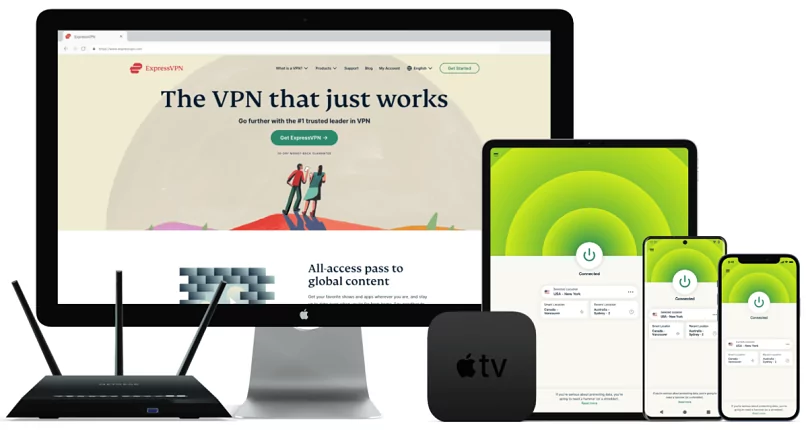
ExpressVPN is the safest all-rounder for using the internet as if you're in the US, pairing strong privacy with steady US connections and apps that need almost no setup. It has servers in 105 countries, including 62 US locations, and all 3,000 servers support torrenting, so there's no need to find a special P2P server before downloading.
 We were able to stream Act Your Age for hours without interruptions
In our tests, ExpressVPN had a speed loss of just 3% on nearby servers, which was the best result we recorded. That kept US Netflix streaming in UHD without buffering, and we didn’t run into issues when browsing US sites or using social platforms like TikTok.
ExpressVPN's privacy setup is built to sidestep US data requests. Because it's based in the British Virgin Islands, outside the US and the 5/9/14 Eyes alliances, it's under no obligation to hand over user data, and its RAM-only servers wipe on each restart, so there's nothing stored to share anyway. Its no-logs policy is audited by PwC and KPMG, with the server setup audited by Cure53.
The clearest trade-off is Smart Location, which isn't always the fastest option, so it's worth testing a few US locations manually if speed matters most. The 30-day money-back guarantee gives you time to try it without committing long term.
Best for
- Fast US streaming and browsing straight out of the box
- Users who want privacy safeguards backed by independent audits
- Torrenting on any server, not only selected locations
Not ideal for
- Users who want the fastest US server picked for them automatically
- People who need deeper protocol and encryption choices
- Anyone seeking servers in every US state
Why we recommend it
- Lightway protocol: ExpressVPN’s lightweight VPN protocol, built for quick connections, stable speeds, and lower battery use across devices.
- Chrome extension: Includes WebRTC blocking and works as a remote control for the desktop app.
- TrustedServer technology: Every server runs from RAM, so each reboot wipes it clean.
- Leak protection: Includes a kill switch and IP/DNS leak protection to help keep your real location from being exposed.
- Threat Manager: Blocks connections to known tracker and malware domains.
2. NordVPN — Threat Protection, NordLynx Speeds, and Specialty Servers

| Best Feature | Threat Protection blocker for a smoother and safer online experience |
|---|---|
| Server Network | Servers in 149 countries, including 55 US locations |
| Works With | Netflix, Disney+, Max, Prime Video, Hulu, ESPN+, and more |
| Torrenting | Yes — including specialty P2P servers in 50+ countries |
NordVPN is a practical pick if you want your US protection handled inside the app instead of through browser add-ons. Its Threat Protection blocks ads, trackers, malware, and risky domains, and when I tested it on allrecipes.com, the page reloaded ad-free once I switched it on. It also lists what it blocked, so you can see what it's catching rather than trust a black box.
 Sometimes I click “Exclude domain” on sites that use pop-ups to give out special offers
Speed is the other reason it ranks here. Connecting from outside the country to a US server over 3,000 miles away, NordLynx held onto 219.26Mbps, a loss of just 19%. That's enough to stream your US accounts in UHD or pull down large files while you're abroad, without the stutter long hauls usually cause.
NordVPN also carries more server types than most US rivals, with 55 US locations among its 149 countries, plus P2P, Double VPN, and obfuscated options. The obfuscated servers are the standout for US daily use: they hide VPN traffic on the campus, workplace, and hotel networks across the US that throttle or block VPNs outright.
The app isn't flawless. The big map layout feels cluttered, some connections were slow to establish, and renewal prices climb after the first term. The 30-day refund window is long enough to see how those US servers handle your daily streaming and browsing first.
Best for
- Users who want built-in web protection beyond the VPN tunnel
- Streaming or downloading over long-distance connections
- Users who need specialty servers for torrenting or extra privacy hops
Not ideal for
- Users who prefer a very plain app layout
- Anyone trying to avoid higher renewal prices
- People who want every advanced feature on every platform
Why we recommend it
- Threat Protection: Filters unwanted content and gives you a visible record of what it blocked.
- NordLynx: NordVPN's WireGuard-based protocol that helps reduce speed loss on distant connections.
- Meshnet: Creates a private encrypted network between your devices for remote access and file transfers.
- Specialty servers: Includes P2P, Double VPN, and obfuscated options for different privacy and access needs.
- Presets: Lets you save server and security settings for specific activities, though it's currently macOS-only.
3. PIA — State-Level US IPs, Open-Source Apps, and Flexible Settings

| Best Feature | US IP addresses available for all 50 US states |
|---|---|
| Server Network | Servers in 50 countries, including 53 US locations |
| Works With | Netflix, Disney+, Max, Hulu, ESPN+, and more |
| Torrenting | Yes — supported on all 29,650 servers |
PIA stands out when you care which US state your IP comes from, not just that it's American. It runs 53 US locations across all 50 states plus DC, the only VPN here that covers every state. That granularity solves problems the others can't: getting into a hometown bank or credit union that checks your state, catching a local team's game through regional sports blackouts, or jumping to a nearby state when one city's servers are congested.
 You can click on the heart next to the server to favorite it for quick access
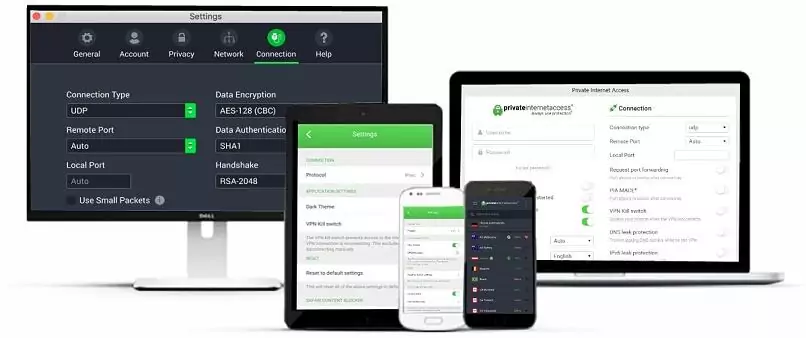
PIA also lets you fine-tune performance more than most. Testing it with Disney+, we dropped OpenVPN encryption from 256-bit to 128-bit to gain speed where top-tier encryption wasn't worth the slowdown. Its 2 dedicated US streaming servers (East and West Coast) pulled up US platforms, including US Netflix, without issue.
The catch is jurisdiction. PIA is headquartered in the US, inside the 5/9/14 Eyes alliances, so it won't suit anyone who wants their provider beyond the reach of US data requests. What offsets that is a no-logs policy that's been independently audited and held up in US court more than once, with 100% open-source apps anyone can inspect, so the privacy claims aren't just promises.
PIA can feel less polished than higher-ranked services, too. The app packs in options, which makes it busier to learn at first. It comes with a 30-day refund window and usually undercuts the premium VPNs on price.
Best for
- Choosing a US IP down to the specific state
- Users who like adjusting protocol and encryption settings
- Torrenting with port forwarding support
Not ideal for
- People who prefer a very simple app
- Users who are uncomfortable with a US-based provider
- Anyone who wants platform-labeled streaming servers
Why we recommend it
- State-by-state US locations: Makes it easier to land a nearby or region-specific connection.
- Open-source apps: Lets security researchers and users inspect the code.
- Encryption options: Allows OpenVPN users to choose between higher encryption and better speeds.
- Advanced kill switch: Can block internet access until the VPN is connected.
- Split tunneling: Sends selected app traffic through the VPN while leaving other apps on your normal connection.
4. Surfshark — Unlimited Connections, Static US IPs, and CleanWeb

| Best Feature | Impressively fast US and global speeds |
|---|---|
| Server Network | Servers in 100 countries, including 24 US locations |
| Works With | Netflix, Disney+, Max, Prime Video, Hulu, ESPN+, and more |
| Torrenting | Yes — supported on some of its servers |
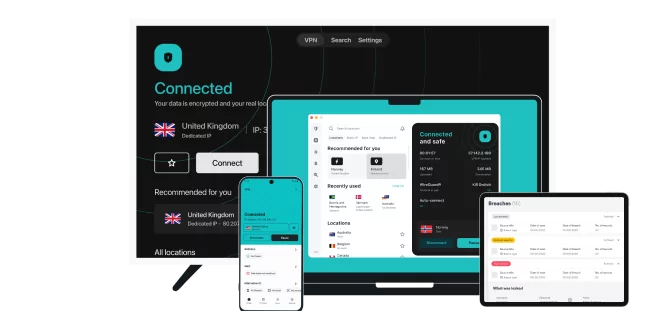
Surfshark earns its place when one subscription has to stretch across a whole US household. A single account runs on every phone, laptop, tablet, browser, and smart TV at once, with no juggling or logging one out to add another, which matters when a family shares streaming logins across rooms.
 The VPN offers the AES-256-GCM algorithm, which is a bit faster than the regular AES 256-bit one
It held up in our speed checks, too. Nearby and distant servers dropped just 7-11%, so The New Yorker loaded fast, and HD/UHD streaming ran without stalls. The network spans 100 countries with 24 US locations, enough range for most US connections, even if it's a shorter list than PIA's.
Its static IP option is the standout for daily US browsing. Surfshark offers 5 static US IPs in New York, and because the address stays the same each session, you hit far fewer of the CAPTCHA loops and suspicious-login prompts that US banking and shopping sites throw at constantly-changing VPN IPs. CleanWeb rounds it out, cutting pop-ups, trackers, and malicious sites as you go.
The trade-off is its Netherlands base, inside the 9 Eyes, so it won't satisfy anyone ranking jurisdiction above device coverage. A strict no-logs policy and RAM-only servers soften that, since the servers keep no activity to begin with. Torrenting also feels less direct here than on VPNs that label their P2P servers outright.
Best for
- Protecting many devices under one account
- Using static US IPs for fewer CAPTCHAs
- Users who want built-in ad and tracker filtering
Not ideal for
- Users seeking a provider in a more privacy-friendly jurisdiction
- People who prefer dedicated P2P server labels
- Anyone who wants the largest US server list
Why we recommend it
- Unlimited connections: Keeps phones, laptops, tablets, and other supported devices connected under the same account.
- Static US IPs: Assigns the same VPN IP address each time, which can help limit CAPTCHA checks.
- CleanWeb: Helps cut down ads and trackers while warning against suspicious sites.
- Virtual locations: Provides IP options in countries where physical servers may be harder or riskier to operate.
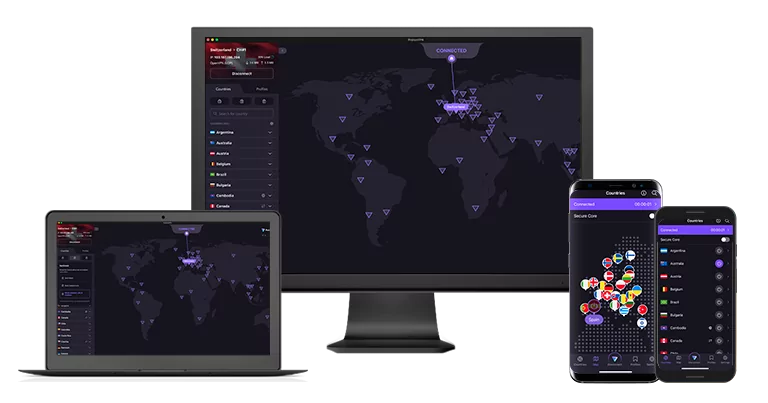
5. Proton VPN — Free Plan, Secure Core, and NetShield
| Best Feature | A free VPN plan with unlimited data and no ads |
|---|---|
| Server Network | Servers in 148 countries, including 22 US locations |
| Works With | Netflix, Disney+, Max, Prime Video, Hulu, ESPN+, and more |
| Torrenting | Yes — P2P supported in nearly all of its 148 countries, including the US |
Proton VPN is the one to reach for when you want a free US plan that isn't crippled, with a paid tier that layers on privacy tools for heavier use. The free version gives you unlimited data and 5 server locations, including the US, though it caps you at 1 device and picks the server for you.
The paid plan is where US streaming opens up. Its optimized servers pulled up Netflix US, Hulu, ESPN+, Disney+, Max, Prime Video, and YouTube TV in our checks, and US speeds held strong, 195.60Mbps in Dallas and 219.30Mbps in New York.
Secure Core is the privacy headliner. It first routes your traffic through hardened servers in Switzerland, Sweden, or Iceland before the exit server, so even a US server can't tie activity back to your real IP. NetShield backs it up, blocking malware, trackers, and ads while you're connected.
The limits are real. Free servers won't handle streaming, torrenting, or gaming, and there's no Smart DNS for consoles or some smart TVs. Split tunneling is missing on iOS, and round-the-clock live chat is limited to the paid plan.
Best for
- Trying a no-data-cap free VPN
- Using Secure Core for extra routing protection
- Streaming US platforms on the paid servers
Not ideal for
- Anyone expecting full control on the free plan
- People who need Smart DNS
- iOS users who rely on split tunneling
Why we recommend it
- Free plan: No-cost access with unlimited data, though it assigns the server for you.
- Secure Core: Adds an extra VPN hop before the exit server.
- NetShield: Helps keep ads, trackers, and malicious domains from loading during VPN sessions.
- VPN Accelerator: Can improve performance on distant or unstable connections.
6. CyberGhost — Streaming-Optimized US Servers, Smart Rules, and NoSpy Servers

| Best Feature | Specialty servers give you fast and stable connections for US platforms |
|---|---|
| Server Network | Servers in 100 countries, including 11 US locations |
| Works With | Netflix, Disney+, Max, Prime Video, Hulu, ESPN+, and more |
| Torrenting | Yes — including 75+ specialty servers optimized for fast downloads |
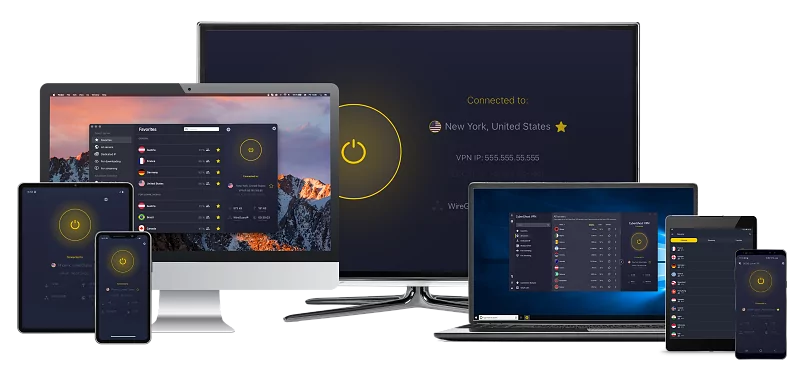
CyberGhost is the easiest choice if your main goal is watching US services, since it labels servers by platform instead of leaving you to guess which location works. Its US streaming servers target Netflix US, Hulu, Max, Paramount+, Prime Video, CBS, and ESPN+, and my team streamed NCAA college football on ESPN+ without a single interruption.
 CyberGhost has US servers for Netflix, Hulu, Max, Paramount+, Prime Video, CBS, ESPN+, and more
US speeds were dependable nearby. Local servers lost just 8%, while farther US locations slipped up to 26%, so a close server is the safer call for HD playback, and distant ones can't keep pace with the faster VPNs above.
A couple of convenience tools help with regular US use. Smart Rules can auto-connect you to a set server or launch chosen apps, handy if you open the same streaming service daily. NoSpy servers give you CyberGhost-run infrastructure in Romania, and the app carries IP/DNS leak protection plus a kill switch.
The downside is the monthly plan, which costs more and comes with a shorter refund window than the long-term options. CyberGhost is also a poor fit for China, so look elsewhere if you need to beat heavy censorship.
Best for
- Choosing US servers by streaming platform
- Automating app-based VPN connections
- Using servers operated directly by CyberGhost
Not ideal for
- People choosing a VPN mainly for restrictive countries
- Users who prefer the cheapest monthly plan
- Anyone who needs the fastest distant US speeds
Why we recommend it
- Dedicated streaming servers: Organizes US options by service.
- Smart Rules: Starts a chosen VPN action automatically when you open selected apps or join certain networks.
- NoSpy servers: Run on infrastructure managed by the provider’s own team in Romania, reducing reliance on third-party server operators.
- WireGuard and OpenVPN: Gives you a speed-focused protocol and a more established security protocol.
7. IPVanish — SOCKS5 Proxy Access, Stable Multi-Device Use, and 4 Protocols

| Best Feature | No limit on device connections |
|---|---|
| Server Network | Servers in 112 countries, including 22 US locations |
| Works With | Netflix, Disney+, Max, Hulu, ESPN+, and more |
| Torrenting | Yes — supported on all 3,200 servers |
IPVanish suits you whether you want full VPN protection, or SOCKS5 proxy credentials for raw speed when you don't need encryption. SOCKS5 is less private than a full tunnel, yet it's useful for torrent clients or a browser setup where you'd rather not route everything through the VPN.
 IPVanish gives you 10 proxy locations in the US, including Atlanta, Chicago, and Los Angeles
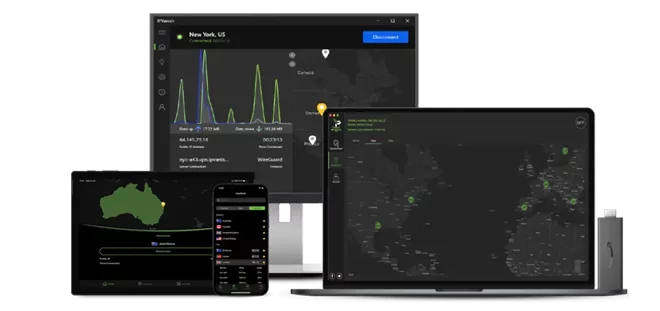
In our testing, it ran several devices at once without noticeable drops. We had an iPhone, PC, tablet, and desktop connected together, each playing a YouTube video, and every connection held. It also pulled up Netflix, Hulu, Max, and Disney+ in the US, though Amazon Prime Video was hit or miss.
The network spans 112 countries with 22 US locations, and torrenting works on all 3,200 servers. The Miami and Chicago servers were quick enough for UHD streaming, and you get WireGuard, IKEv2, IPSec, and OpenVPN to switch between depending on the network you're on.
Like PIA, IPVanish is US-based, so a no-logs policy carries the weight here, and it has been independently verified. The app adds 256-bit encryption, DNS/IP/WebRTC leak protection, and an automatic kill switch, but it's a weak option for China or other heavily restricted networks.
Best for
- Adding SOCKS5 to browser or torrent-client traffic
- Keeping several devices connected at once
- Choosing from 4 protocol options
Not ideal for
- Users who want the strongest jurisdiction profile
- People who need reliable access in China
- Anyone who mainly streams on Amazon Prime Video
Why we recommend it
- SOCKS5 proxy: Works with Firefox and torrent clients for app-specific proxy routing.
- 3,200-server network: Allows torrenting across every server.
- Automatic kill switch: Blocks traffic if the VPN connection drops.
- Simple refund process: Lets you cancel from your account dashboard without contacting support.
8. PrivateVPN — Simple View, Stealth VPN, and Dedicated US Servers
| Best Feature | The easiest-to-use VPN for the USA |
|---|---|
| Server Network | Servers in 63 countries, including 12 US locations |
| Works With | Netflix, Disney+, Max, Prime Video, Hulu, ESPN+, and more |
| Torrenting | Yes, including 16 specialty servers for fast downloads (2 in the US) |
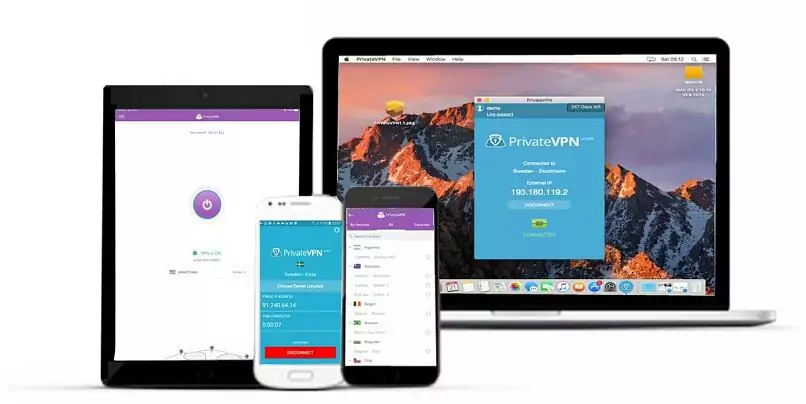
PrivateVPN fits a first-time user who wants an app that's easy to learn but doesn't strip out the advanced controls entirely. Simple View keeps the home screen down to picking a server and connecting in one click, while Advanced View is waiting whenever you're ready for settings like Stealth VPN.
Stealth VPN is the obfuscation tool, and it hides the fact you're on a VPN where that matters most in the US: dorm networks, public library WiFi, and locked-down office connections that block VPN traffic outright. PrivateVPN also runs 16 download-optimized servers, 2 of them in the US, in LA and New York.
 You can set up PrivateVPN on any device in under 1 minute to browse sites in the US
The small network is the honest limitation. With 200 servers across 63 countries and only 12 US locations, you get far fewer fallback options than the bigger providers on this list, and speeds can wobble. Its low ping held up well for US online games like Fortnite and GTA, though.
The 30-day money-back guarantee lets you check whether that smaller US footprint reaches your area before you commit. Live chat is on hand too, even if the coverage isn't as round-the-clock as the larger names here.
Best for
- First-time VPN users who want a cleaner app layout
- Using Stealth VPN on networks with VPN blocks
- Accessing dedicated US servers in LA or New York
Not ideal for
- Users who want a large global network
- People who need the most reliable speeds
- Anyone who wants advanced features without switching app views
Why we recommend it
- Simple View: Puts the main server and connection controls on one cleaner screen.
- Advanced View: Opens access to more settings when you need them.
- Stealth VPN: Makes VPN traffic less obvious on networks that restrict VPN use.
- Dedicated servers: Offers 16 download-optimized servers, including 2 in the US.
How Do Our Top US VPNs Compare Side by Side?
- ExpressVPN — Lowest nearby speed loss in this comparison
- NordVPN — Fast nearby speeds with a privacy-friendly base
- PIA — Most precise US location choice
- Surfshark — One subscription protects all your devices
- Proton VPN — Free plan with no data caps
- CyberGhost — Longest refund window and streaming filters
- IPVanish — Unlimited connections with flexible protocol options
- PrivateVPN — Smaller network with simpler controls
Speed, US location count, and jurisdiction are where these eight separate most, so the table below lines those up to match a VPN to what you'll actually do with it.
How Were These US VPNs Tested?
We evaluated each US VPN using practical performance, privacy, and usability checks instead of relying on feature lists alone. Privacy carried extra weight because 52% of US adults who use a VPN do so to protect their IP address, according to a February 2025 CNET and YouGov survey.1 Security was just as important: the FBI’s IC3 received 859,532 complaints about suspected internet crime in 2024, with reported losses exceeding $16 billion.2
We paid close attention to:
- Nearby and long-distance speed results from US-based connections
- US server network size
- Encryption protocols
- DNS/IP leak protection
- Kill switch behavior
- US streaming access
- Torrenting support
- App clarity across major platforms
Our full methodology page explains the complete VPN testing process across different devices and networks.
How Can You Choose a Reliable VPN for US Content?
A reliable US VPN should match how the connection will be used, not just advertise a large server list. The main things to check are:
- US location choice: A wider spread of US cities and states means a working alternative when your usual server is busy or blocked by a specific site.
- Platform compatibility: A VPN with a proven record on major US streaming sites is better for accessing paid accounts while traveling.
- Logging policy: A clear no-logs policy helps show what the provider says it does and doesn’t collect.
- Connection safeguards: Leak protection and a kill switch reduce the risk of exposing the real IP address during connection drops.
- Device allowance: The connection limit should match the number of phones, laptops, browsers, or streaming devices in use.
- Refund terms: A money-back period gives room to check performance with preferred apps, locations, and networks.
FAQs
Final Verdict
The right US VPN depends on the trade-off you’re most comfortable with. ExpressVPN is still the strongest overall pick because it had the lowest nearby speed loss in our comparison at 3% and works well across desktop, mobile, and browser use. Where it sets a limit is device count, so if you're connecting a whole household at once, PIA covers every device on one subscription.
That said, the ranking isn't one-size-fits-all. Some users will care more about state-level server choice, built-in blocking tools, or a free plan with fewer restrictions. That's why the best choice is the VPN that matches the way you actually plan to connect, not just the one with the highest rank.
References
- https://www.emarketer.com/content/consumers-lean-on-vpns-pursue-online-privacy
- https://www.fbi.gov/news/press-releases/fbi-releases-annual-internet-crime-report
About the Author
Keira was a senior writer at vpnMentor. She is an experienced cybersecurity and tech writer dedicated to providing comprehensive insights on VPNs, online privacy, and internet censorship.