 EN
EN
 Dansk
Dansk  Deutsch
  Español
  Français
  Hrvatski
  Indonesia
  Italiano
  Magyar
  Nederlands
  Norsk
Norsk  Polski
  Português
  Română
  Suomi
Suomi  Svenska
  Tiếng Việt
  Türkçe
  Čeština
  Ελληνικά
  Русский
  Українська
  български
  ไทย
ไทย  日本語
日本語  简体中文
简体中文  한국어
한국어  עברית
עברית  العربية
 How To Install Kodi Addons & Builds: Complete Guide (2026)

- How Do You Set Up Addons on Kodi?
- What’s the Difference Between Kodi Addons and Builds?
- What Should You Know Before Installing Kodi Addons and Builds?
- How Do You Install Kodi Addons?
- How Do You Install Kodi Builds?
- Are Kodi Addons and Builds Legal and Safe?
- How Can You Stay Safe While Installing and Using Kodi Addons and Builds?
- Which VPNs Work Best With Kodi Addons and Builds in 2026?
- Why Are Kodi Addons and Builds Not Working? Common Errors and Quick Fixes
- How Do You Keep Kodi Fast and Stable After Installing Addons or Builds? Quick Tips
- FAQs
- Final Takeaway
You can install Kodi addons and builds in 2026 by using Kodi’s Add-ons menu, adding the right repository source, and enabling Unknown Sources only when installing third-party addons or builds.
Kodi is powerful and completely free, but getting addons and builds to work smoothly isn’t always straightforward. When I first started, I spent hours troubleshooting “installation failed” and “could not connect to repository” errors — digging through outdated tutorials and Reddit threads, wondering what I was missing. With over 50 million installs on Google Play alone (Play Store, 2025)¹, you’re probably facing the same frustrations I once had.
Luckily, I’ve learned that most problems come down to a few fixable things: outdated repositories, broken dependencies, or unverified builds. Kodi addons and builds are worth the time and trouble if you want a flexible, no-cost media hub and you’re willing to do light maintenance. Once you know where to get trusted sources and how to set them up cleanly, Kodi becomes the all-in-one entertainment center it's meant to be.
You don’t need special tools or advanced skills; you just need a few quick settings adjustments and working repository links. In this guide, I'll take you through the exact steps I use to install Kodi addons and builds on my devices, plus some practical tips to boost Kodi performance and avoid common issues.
How Do You Set Up Addons on Kodi?
To set up Kodi addons, first decide whether you’re installing from Kodi’s official repository or an external repository. Official addons are the simplest route, while third-party addons give you more choices but take a few extra setup steps.
- Enable Unknown Sources for third-party addons.
Open Kodi, go to Settings > System > Addons, and toggle the Unknown Sources option. You can skip this step if you’re only installing official addons. - Add the file source.
Return to the Settings menu, select File Manager, double-click Add Source, select None, paste the repository link, and name it something easy to remember. - Install the addon.
Go back to the Settings menu and choose Addons. For official addons, select Install from repository > Kodi addon repository, then pick and install the addon you want.
What’s the Difference Between Kodi Addons and Builds?
Kodi addons and builds are related but serve different purposes. Addons are like plugins or apps that add one specific feature or content source to Kodi. A build is a pre-configured Kodi setup that bundles multiple addons with a custom layout, skin, widgets, shortcuts, and settings.
- Kodi addons: Best if you want to choose individual features or content sources yourself. For example, The Crew, Popcornflix, and Netflix addons provide movies and TV shows within Kodi, while PBS Kids and TV Ontario Kids give access to a wide range of cartoons and anime.
- Kodi builds: Best if you want a ready-made Kodi layout with addons and visual customization already included. For example, Diggz Xenon has a futuristic interface, popular addons, and extensive customization options.
Most addons are designed around a specific service or type of content, like sports, music, and documentaries. You can install addons without using a build, which gives you more control over what Kodi includes.
Builds are optional, but they can make setup quicker and give Kodi a fresh, customized look that’s ready to use right away. Just keep in mind that installing a build will overwrite your existing addons and settings. A build also relies on its included addons to work properly.
What Should You Know Before Installing Kodi Addons and Builds?
The process for installing Kodi addons and builds is similar across most devices, but some platforms take longer to navigate. I used Windows 10 for this guide, and the steps looked pretty much the same across all devices I tested.
Android boxes and Fire TV Stick rely on a remote control, which makes typing URLs, scrolling through menus, and selecting addons feel a bit slower than using a mouse or keyboard. On Fire TV Stick, you also need to sideload Kodi instead of installing it directly.
How Do You Install Kodi Addons?
The steps below show the full installation process for official addons first, then addons from external repositories. This gives you both paths without installing a build or changing your whole Kodi setup.
Real Debrid isn’t required for Kodi to work. Kodi runs normally without it, but supported video addons can use Real Debrid to improve stream quality and show more reliable links.
How To Install Kodi Addons Through the Official Kodi Repository
The official Kodi addon repository is the easiest and safest place to get addons because it’s built into Kodi and includes addons vetted for safety and legality. You’ll find options like YouTube, RaiPlay, and ARD Mediathek, as well as utility addons such as Backup, Trakt, IPTV Manager, and Log Viewer for Kodi.
Here’s how to install one:
1. Open Kodi’s addons browser. From Kodi’s home screen, go to Settings, then select Add-ons from the System menu. Alternatively, from the home screen, select Add-ons, then click the box icon (Package Installer) at the top.
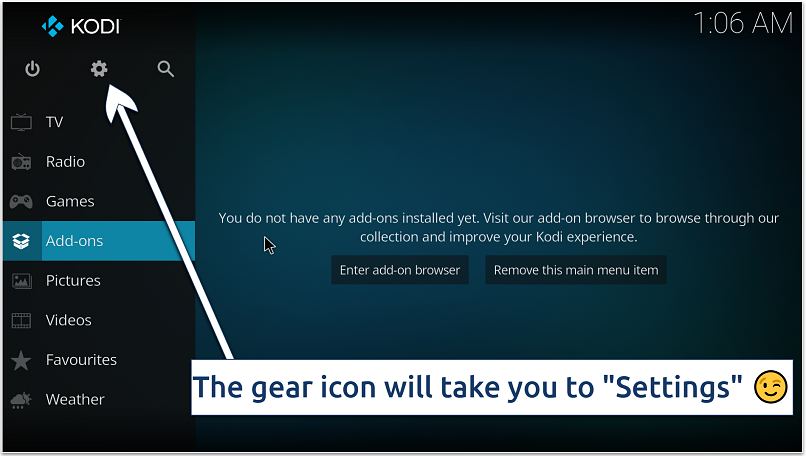 This process works for Android TV and Fire TV
2. Choose Install from repository from the list. To access unofficial Kodi addons, follow the external repository steps in the next section.
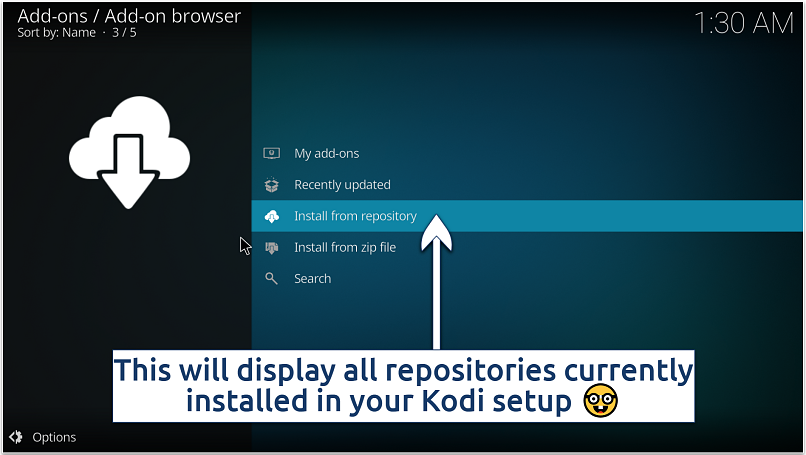 Every addon in the official repository is free from malicious code or pirated content
3. Choose the Kodi Add-on repository. Usually, this option pops up right after clicking Install from repository. That’s been the case for me when testing Kodi versions Omega (v21), Nexus (v20), and Matrix (v19). During this latest setup, it didn’t appear right away after a fresh install and only showed up after I added an addon from an external repository.
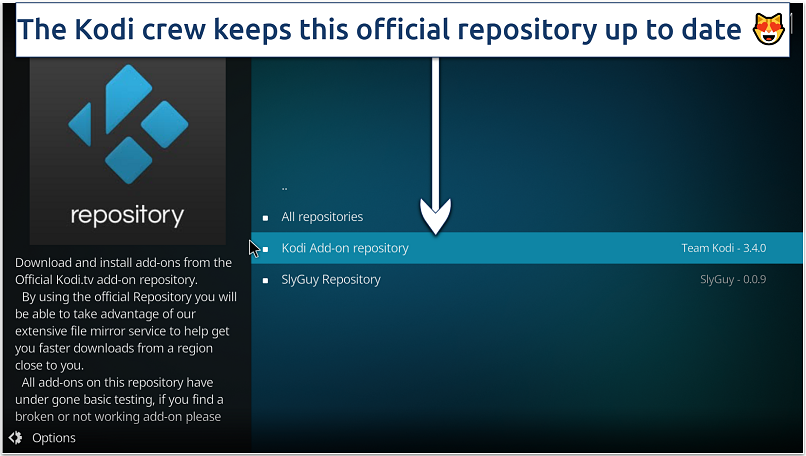 Addons in the official repository differ between Kodi versions
4. Browse categories. Navigate the categories, such as Movie addons, Music addons, Picture addons, Game addons, and Program addons, then find the addon you want.
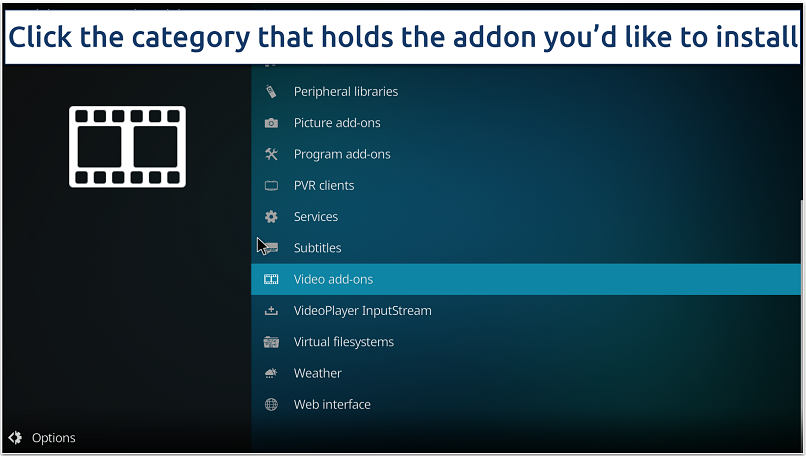 For example, for CBC Sports, go to Video add-ons and scroll to CBC Sports
5. Select the addon’s name and hit Install. Kodi will download it along with any required dependencies.
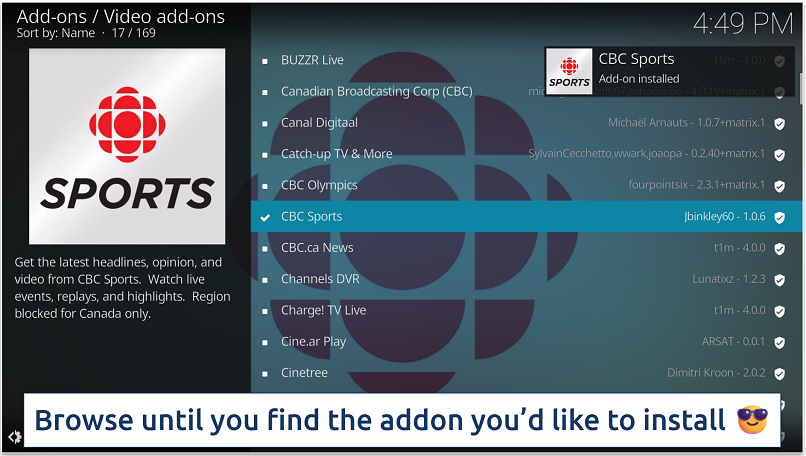 A notification will pop up in a few seconds confirming successful installation
6. Access and launch the installed addon. While still in the same window, click the addon and choose Open to launch it right away. Alternatively, go back to the home screen, and under Addons or specific categories like Video addons, Picture addons, and Music addons, you’ll find it listed there. Simply click the addon and start using it.
How To Install Kodi Addons From an External Repository
External repositories are used when an addon isn’t available in Kodi’s built-in repository or doesn’t appear in your current Kodi version. I’ll use The Crew addon as an example, but the same process applies to other third-party addons like Exodus, Ares Wizard, and Covenant.
1. Enable Unknown Sources. Kodi blocks third-party addons by default, so you’ll need to enable Unknown Sources first.
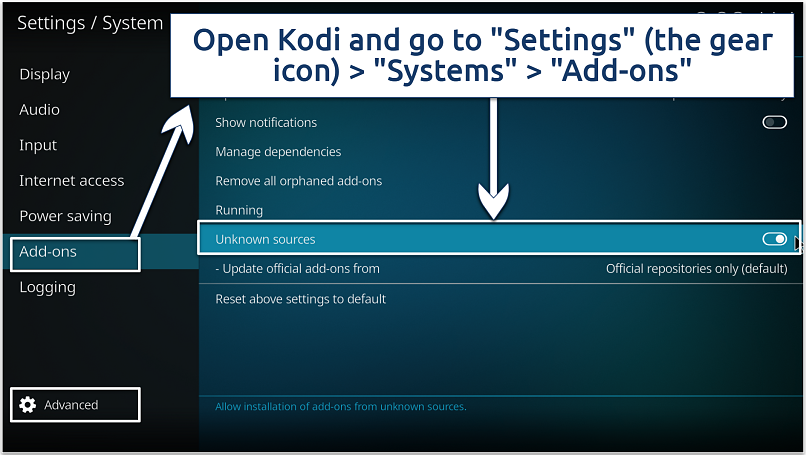 Enable Unknown Sources on the right side and confirm by clicking “Yes”
2. Add the repository source. Press the back arrow to return to the System menu, then open File manager. If you have used Kodi before and didn’t click Yes, I’m Sure when uninstalling, you’ll probably find your old files still there because clicking that option deletes your profile folder.
Next, double-click Add source in the left panel. When the pop-up appears, select None, then type in or paste the URL of the repository you want to add — for The Crew, that’s https://team-crew.github.io/.
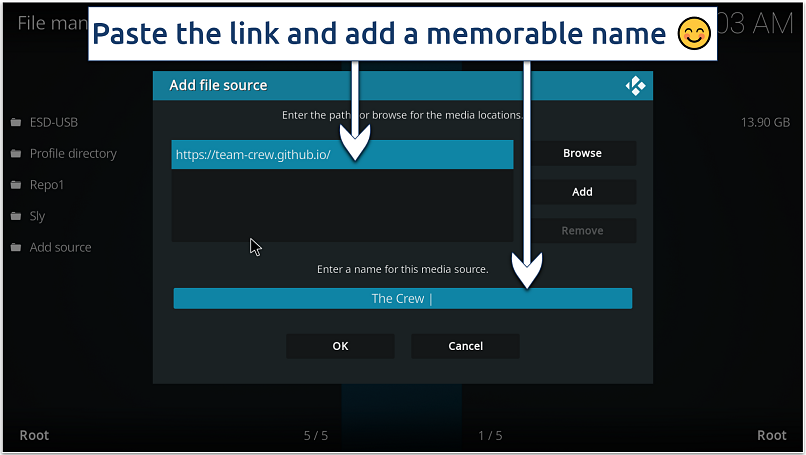 Once you click "OK", the name you assigned will appear on the left, confirming the source was added successfully
Make sure to paste or type the URL correctly; even a single missing character or space can cause errors. Also, check that your internet is working correctly so Kodi can reach the source and install the repository without interruptions.
3. Install the repository from the zip file. Return to the System menu, choose Addons, then select Install from zip file.
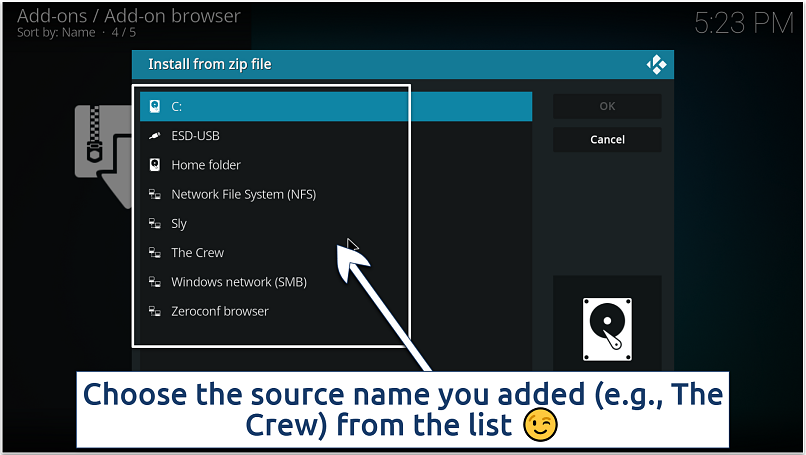 Next, click the zip file to get the installation started
Kodi will install the repository; after a moment, you’ll see a notification confirming everything went through.
4. Install the addon from the repository. While still in the addon menu, choose Install from repository, and then open the repository you added.
-
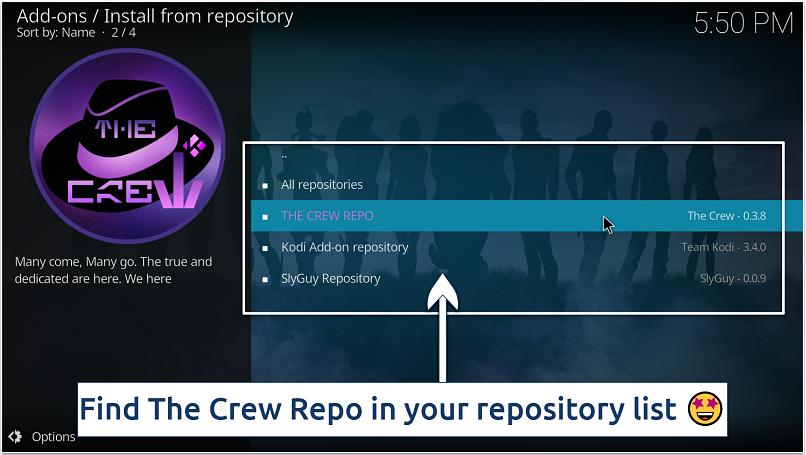
- Any other repositories you have added will also display here

-
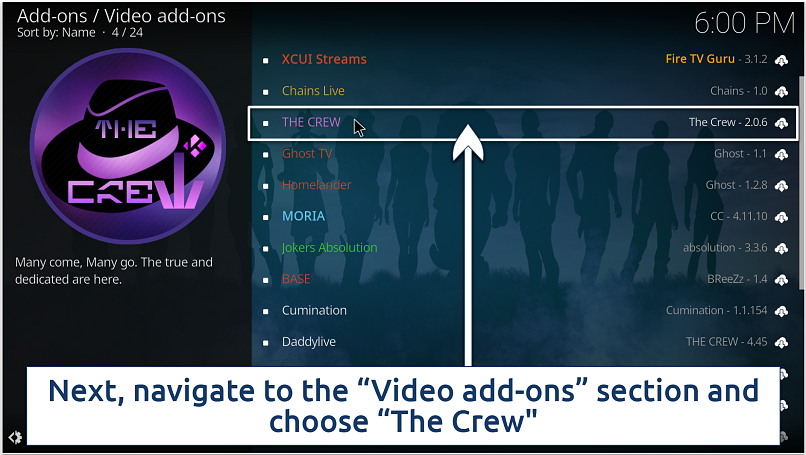
- Click "Install" and hold on for the "installed successfully" notification

5. Open the addon. Once installed, third-party addons open from Kodi’s Addons area like official addons.
How Do You Install Kodi Builds?
Installing a Kodi build takes a bit longer than adding a single addon, but the process is quite similar. A Kodi build usually requires a repository and then a build wizard, which is a program addon that downloads and configures the build for you.
Before installing a build, it’s often recommended to start with a fresh Kodi installation or at least reset Kodi to default settings. This helps prevent conflicts between the build and anything already installed.
Kodi isn’t designed to run multiple builds at the same time. Trying to keep more than one can slow performance, create conflicts, or leave parts of an older setup behind.
The first three steps are the same as installing third-party addons from external sources, so I’ll keep them shorter here. If you prefer a detailed explanation with images, you can scroll to the section above.
Follow these steps to install a Kodi build:
1. Enable Unknown Sources in Kodi
From Kodi’s home screen, click Settings (gear icon) > System > Addons, and toggle on Unknown Sources. This is a one-time setting unless you reset Kodi later.
2. Add and Name the Build’s File Source
- Go to the System menu, choose File Manager, and double-click Add source. Select None, then enter the repository URL for the build you want to install. For example, to install the Doomzday build, type in or paste https://doomzdayteam.github.io/doomzday exactly as shown.
- Next, give your source an easy-to-remember name and click OK. The name you assigned will appear in the File manager list, confirming the source was added successfully.
3. Install the Repository Zip File
- Go back to the Settings hub, choose Addons, and select Install from zip file. Choose the name you assigned to your source in step 2, then click the repository zip file, for example, repository.doomzday-1.1.0.zip.
- Wait for the installation confirmation message.
4. Install the Build Wizard
- On the same screen, select Install from repository and open the repository you installed in step 3, for example, Doomzday.
- Inside, find Program addons and choose the wizard for your build.
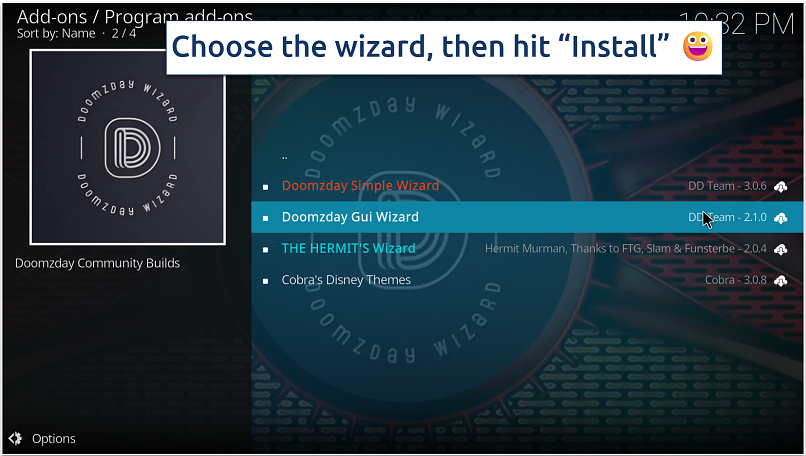 Some builds feature multiple setup wizards — pick the one that fits your build
 - Wait for the wizard to install. This takes a few seconds, and you might get an additional prompt to install dependencies. Click OK. Some builds, like Chain Theme, might ask what to keep during setup.
5. Open the Wizard and Choose a Compatible Build
- After the wizard is installed, open it. Many wizards will pop up automatically with a setup screen or menu. If prompted with notes and settings, you can continue or dismiss them.
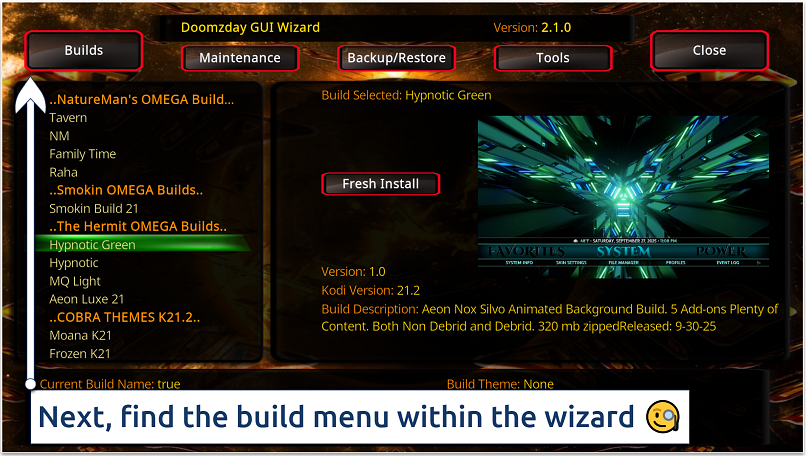 You should see a list of available builds like Smokin OMEGA Builds
 - Select your desired build from the list and make sure it matches your Kodi version. In the image above, the one I selected works with Kodi v21.2.
- Choose the install type the wizard offers:
- Fresh Install: Starts from a clean slate before applying the build. I prefer this option because it gives the build the cleanest start.
- Standard Install: Keeps some of your existing data and preferences. Some wizards offer only one of these options.
- After confirming the prompts, the wizard will download and install the build, then apply the skin, addons, and settings. This process can take a few minutes.
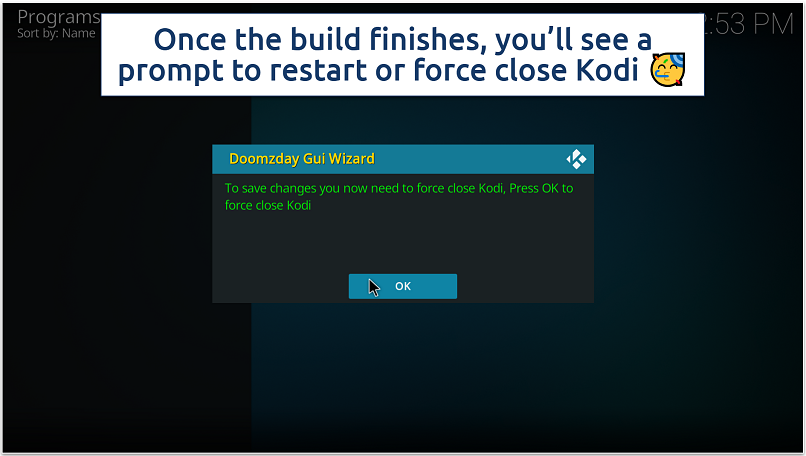 Accept the prompt, then relaunch Kodi
 - Voila — your new build is ready. Kodi will reopen with its new interface, custom background, menus, and pre-installed addons.
Are Kodi Addons and Builds Legal and Safe?
Kodi itself, and most addons and builds, are legal, but legality and safety depend on what they connect to and what code they install. The main legal risk comes from third-party addons that link to copyrighted content without permission. Addons and builds are riskiest when they include outdated code, tampered files, or unreliable sources.
For example, if an addon offers the latest movies and premium sports for free, it’s almost certainly linking to unauthorized streams. I recommend steering clear of those, since streaming or downloading unlicensed material can create legal risk. The good news is that there are plenty of legal Kodi addons that let you securely stream movies, live TV, and more.
The concern varies by addon or build:
- Addons: While many addons don’t cause problems, others can expose you to malware, malicious scripts, data leaks, and data theft, especially if they come from unofficial sources. A peer-reviewed study published in the ACM Digital Library (2023) found that most addons people install are unofficial but generally safe to use. Still, about 78% of Kodi users have at least one unsafe addon installed.2
- Builds: Not all Kodi builds are trustworthy. Some come preloaded with outdated or risky addons, which can make your system unstable or expose your data without you realizing it. Others may contain hidden scripts that track usage or automatically connect you to unsecured sources.
How Can You Stay Safe While Installing and Using Kodi Addons and Builds?
Focus on where files come from, what access they ask for, and how much personal information you connect to them. With a bit of care, you can reduce security risks, protect your privacy, and stream movies, sports, and more while you explore everything Kodi offers.
- Choose reputable repositories. When searching for addons, especially third-party ones, and builds, avoid random or unverified websites. Stick to these sources to lower the chance of downloading harmful files.
- Enable antivirus software. Before downloading any files, make sure your antivirus software is active. It can scan zip files and block suspicious elements before they reach your device.
- Keep Kodi updated. Always use the latest version of Kodi for better addon compatibility and protection against vulnerabilities in older versions.
- Review addon permissions. Before installing an addon, check what permissions it requests. Skip addons that ask for unnecessary access to your system.
- Avoid sharing your accounts. If you’re using Real Debrid, Trakt, or any integrated account, don’t share your Kodi credentials with others. Account sharing can expose your viewing habits or compromise your privacy.
- Use a separate streaming device. If possible, run Kodi on a device that you don’t use for personal accounts, banking, or messaging. This reduces cross-exposure if something goes wrong.
- Limit personal information. Most addons don’t require an account, but if you integrate third-party services like Real Debrid or Trakt, use only the bare minimum info when signing up. A separate email can help keep your primary inbox protected if one of these services is ever compromised.
- Use a reliable VPN when privacy matters. A VPN isn’t necessary to install Kodi addons and builds, but it can encrypt your traffic and hide your IP address while you’re using Kodi. This is especially useful on shared networks or when you want to reduce tracking from third parties.
Which VPNs Work Best With Kodi Addons and Builds in 2026?
The best VPN for Kodi should offer fast speeds, stable connections, strong privacy features, and settings that support streaming, addons, and builds.
- CyberGhost — Best for automatic Kodi setup. CyberGhost is easy to configure to launch with Kodi automatically, so your VPN connection starts as soon as Kodi opens. It also has dedicated servers for movie streaming and torrenting that pair well with Kodi.
- ExpressVPN — Best for fast, stable Kodi use on restrictive networks. ExpressVPN’s high-speed servers and advanced obfuscation can help Kodi work on networks that block or slow VPN traffic.
- Private Internet Access — Best for customizing Kodi privacy and performance. Private Internet Access gives you more manual controls, which can help you fine-tune security and performance when using Kodi.
Why Are Kodi Addons and Builds Not Working? Common Errors and Quick Fixes
Kodi addon and build problems usually come from a broken source link, version mismatch, expired login, full cache, or connection block. If an addon won’t open, streams keep buffering, or a build fails to install, start with the error message and use the matching fix below.
How Do You Keep Kodi Fast and Stable After Installing Addons or Builds? Quick Tips
Once Kodi is configured with your favorite addons or a build, regular maintenance helps prevent slow menus, broken shortcuts, buffering, and clutter. The tips below cover small upkeep habits that make the setup easier to manage.
FAQs
Final Takeaway
Kodi is still worth using if you want a free media center you can shape around your own setup. Official addons are the simplest option for stable, vetted content, while third-party addons and builds add more layout options, tools, and sources when they come from maintained repositories.
For the best experience, keep the setup lean: use a current Kodi version, choose active repositories, remove addons you don’t use, and stick to content you have the right to access. With that approach, Kodi can stay practical, customizable, and easier to maintain across devices.
References
- https://play.google.com/store/apps/details?id=org.xbmc.kodi&hl=en_US
- https://dl.acm.org/doi/10.1145/3563700
Your online activity may be visible to the sites you visit
Your IP Address:
216.73.216.38
Your Location:
US, Ohio, Columbus
Your Internet Provider:
Some sites might use these details for advertising, analytics, or tracking your online preferences.
To protect your data from the websites you visit, one of the most effective steps is to hide your IP address, which can reveal your location, identity, and browsing habits. Using a virtual private network (VPN) masks your real IP by routing your internet traffic through a secure server, making it appear as though you're browsing from a different location. A VPN also encrypts your connection, keeping your data safe from surveillance and unauthorized access.
About the Author
Lawrence Wachira, a former Editor at vpnMentor, is dedicated to making the internet safer for everyone. His expertise in VPNs, online privacy, and editing enabled him to help the vpnMentor team deliver comprehensive insights, user guides, and comparisons that empower readers to take control of their digital safety.

Please, comment on how to improve this article. Your feedback matters!